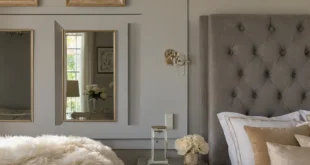
Making the switch from carpet to tile flooring often presents design challenges, particularly when the floor heights don’t align perfectly. Here, we’ll delve into creative solutions to merge these surfaces, ensuring your transitions are both functional and aesthetically appealing.
Implement Gradual Blending Techniques
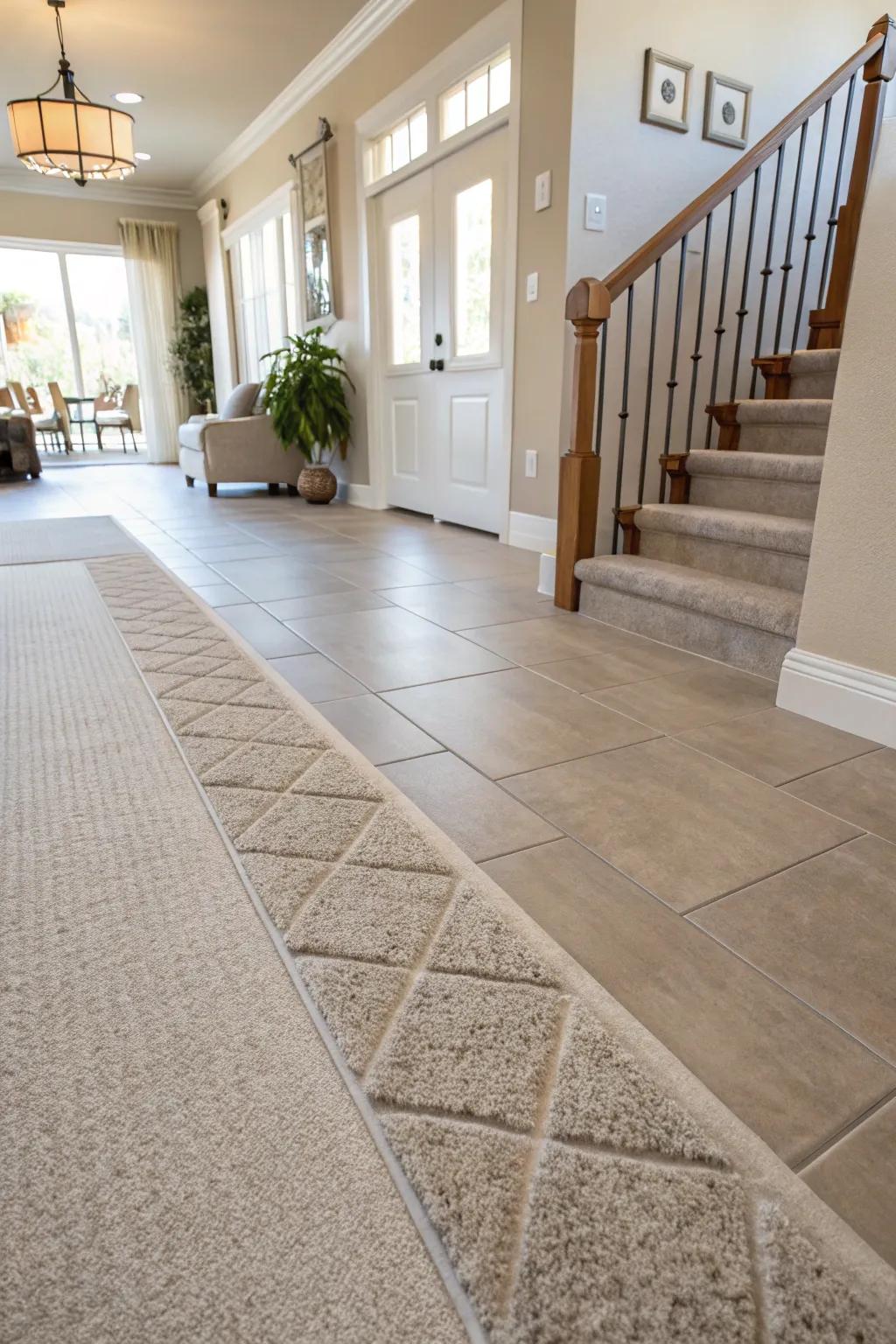
Integrating subtle color shifts or material blends creates a smooth, uninterrupted flow between carpet and tile. This approach is especially effective in expansive rooms where cohesion is key.
Recommended products:
- Soft Color Floor Strips: These strips facilitate gentle color transitions and help minimize tripping risks.
- Color Gradient Rugs: Use rugs with fading hues to naturally merge carpet and tile zones.
- Multi-Level Thresholds: These pieces accommodate varying floor heights while adding a stylish touch.
Opt for a Metal Transition Strip for a Sleek Look
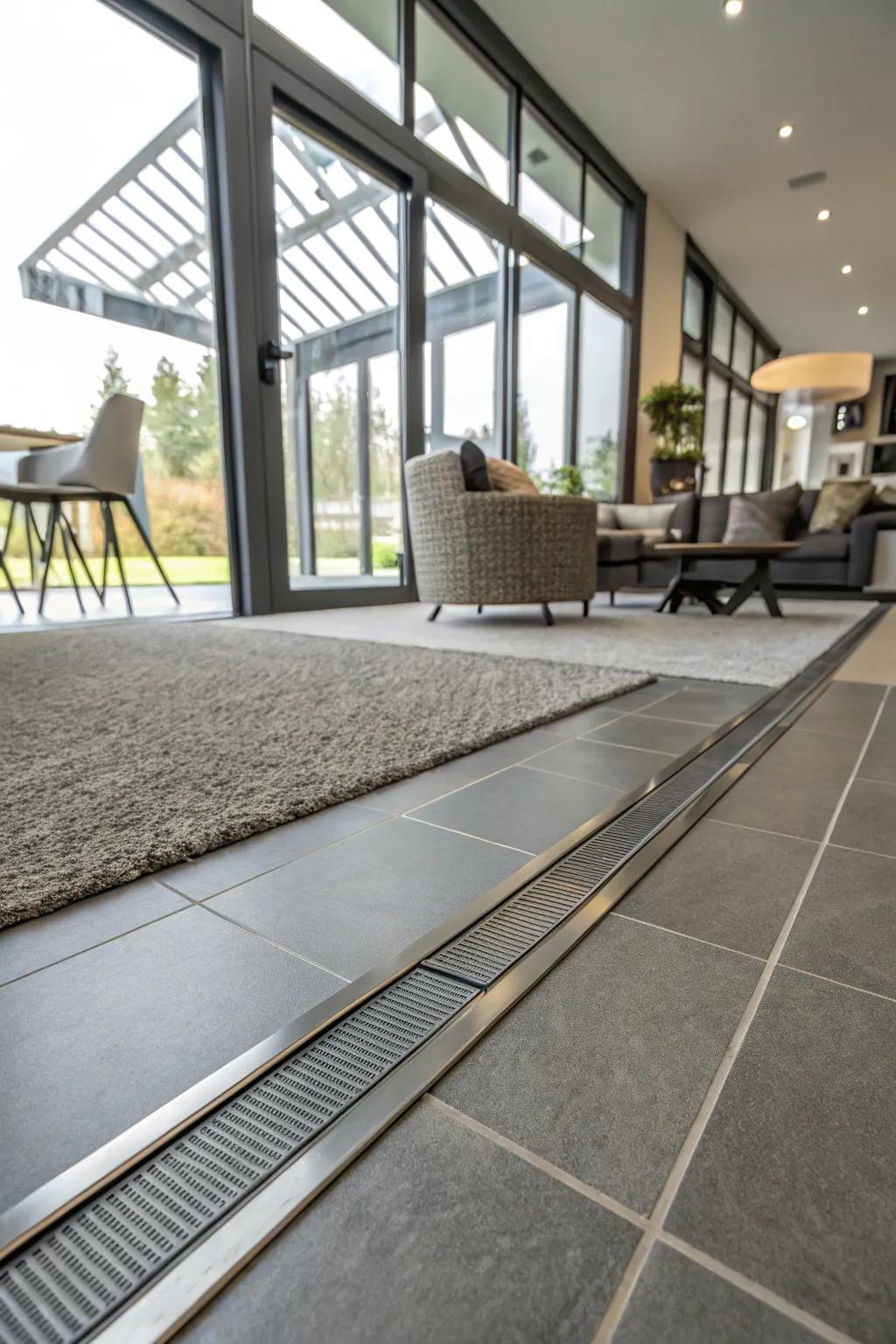
Metal strips provide a contemporary and polished finish, ideal for modern interiors. In many of my designs, these strips elegantly emphasize the flooring change.
Top choices include:
- Adjustable Metal Floor Connector: Perfect for leveling uneven surfaces between carpet and tile.
- Aluminum Blending Strip: Offers a sleek finish and accommodates different floor heights.
- Heavy-Duty Metal Threshold: Designed for high-traffic areas, combining durability with style.
Secure Edges with a Hidden Edge Bar
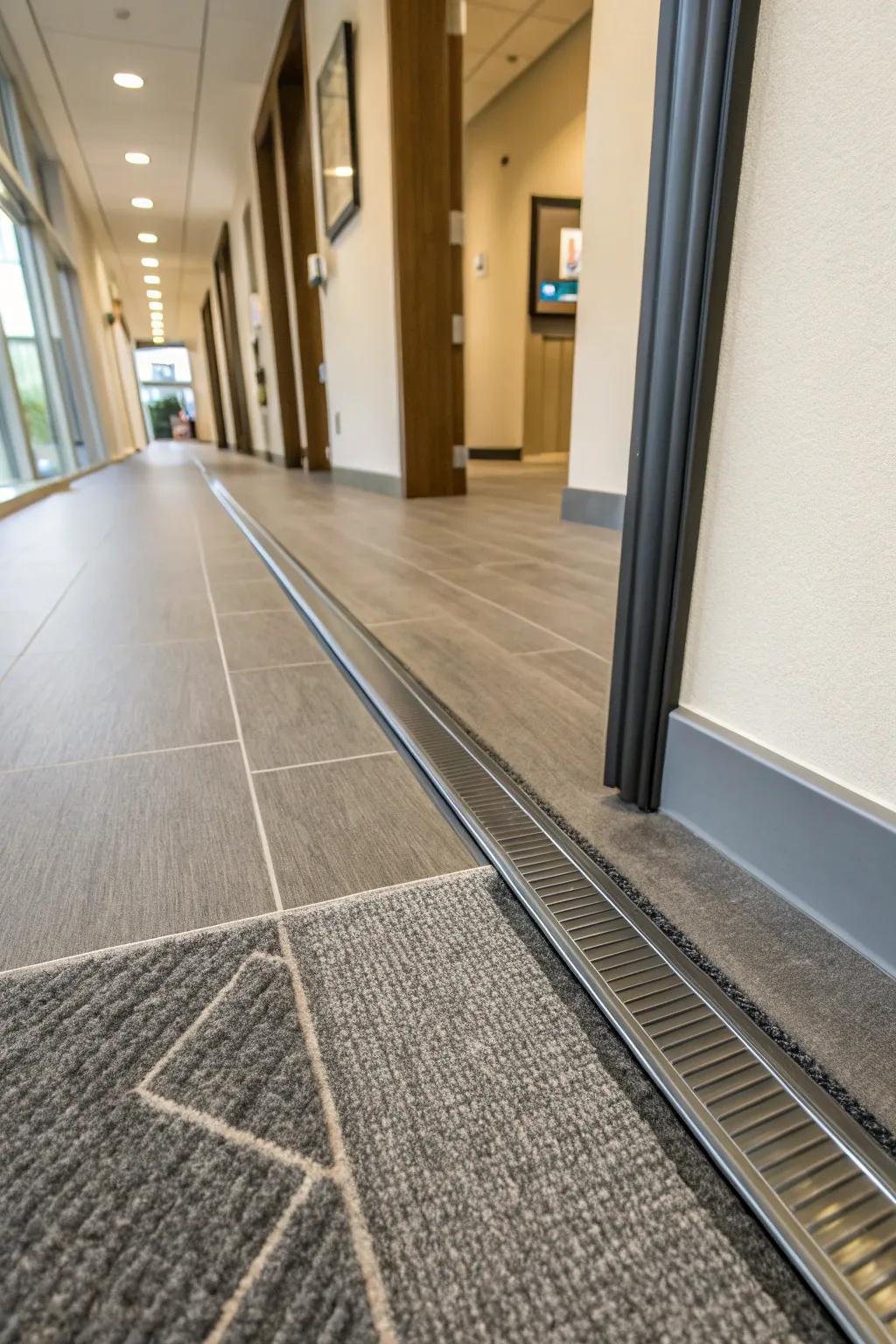
The Z-bar system is a reliable choice for tucking carpet edges beneath tile, offering added strength. This method excels in high-traffic zones where longevity is essential.
Consider these options:
- Heavy-Duty Concealed Trim Connector: Provides robust edge protection for busy areas.
- Durable Concealed Edge Bar: Extends carpet life by securing edges discreetly.
- Flexible Floor Transition Strip: Easily manages height differences for a smooth finish.
Protect Edges with Professional Trim Solutions
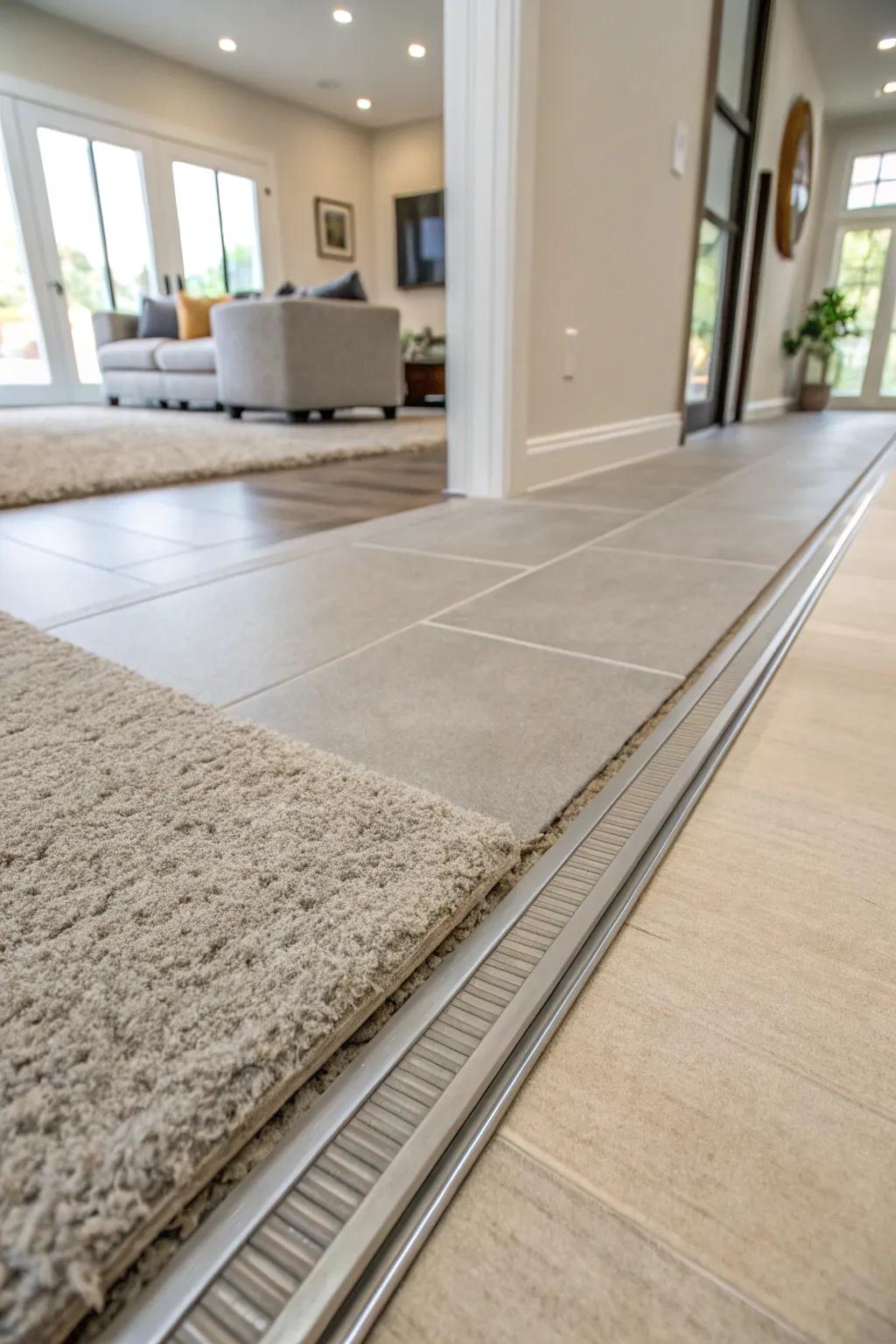
Schluter trims deliver a sleek, professional edge, perfect for safeguarding flooring borders while enhancing modern aesthetics. They’re my go-to for a polished, durable finish.
Recommended products:
- Metal Edge Finish Trim: Adds a stylish and seamless finish to transitions.
- Flexible Floor Edge Strip: Ensures smooth transitions between carpet and tile.
- Height Reducer with Hidden Fasteners: Creates clean, flawless height adjustments.
Embrace Organic Tile Edge Designs for Natural Flow
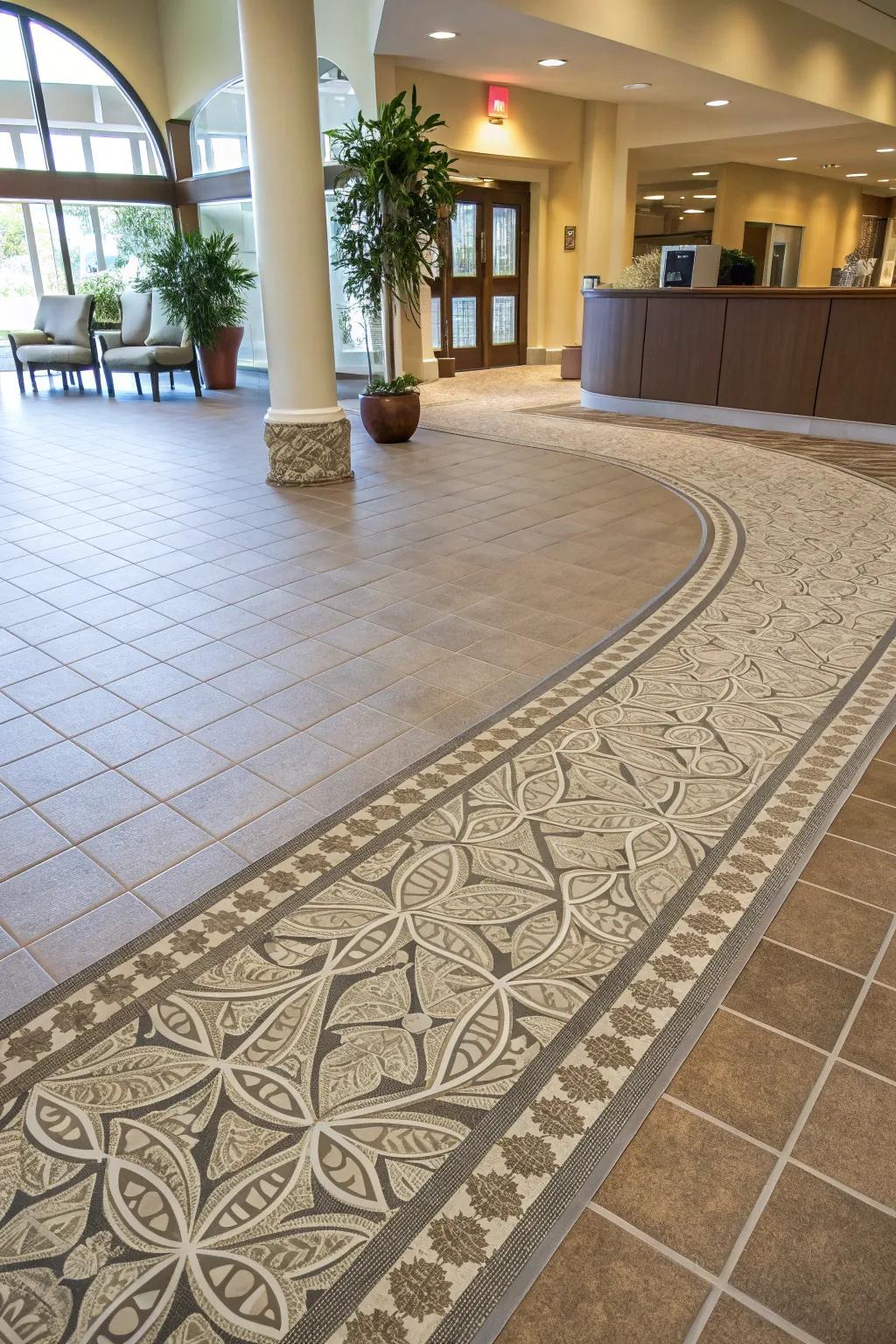
Incorporating organic, flowing shapes can soften the boundary between tile and carpet, fostering a unified atmosphere. This technique works wonderfully in open-concept living spaces.
Suggested products:
- Decorative Floor Blending Strips: Add artistic flair while merging different flooring types.
- Flexible Floor Edge Molding: Adapts to various heights and curves for smooth transitions.
- Organic Tile Trim: Elevates spaces with elegant, nature-inspired edges.
Adopt the Tuck-In Edge Method for Clean Lines
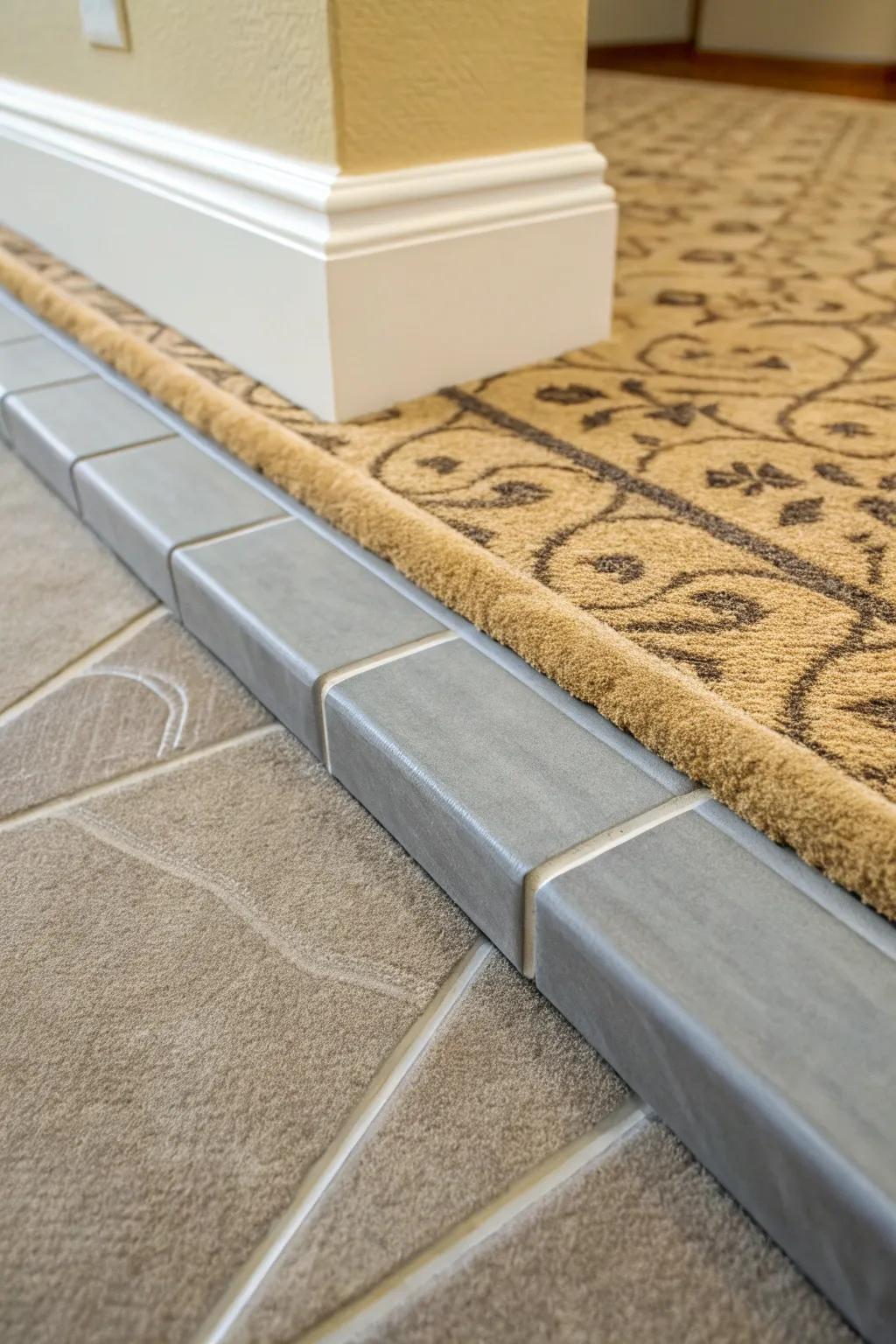
The tuck-in method remains a classic for a reason, neatly folding carpet edges under tile for a minimalist appearance. This is especially useful in functional areas where simplicity is desired.
Products to explore:
- Premium Carpet Edge Binder: Ensures a tight, durable connection between surfaces.
- Elegant Tile Finishing Edge: Adds a refined touch to tile borders.
- Carpet Grip Nails: Secure carpet edges firmly for lasting stability.
Introduce Dynamic Diagonal Lines for Visual Interest
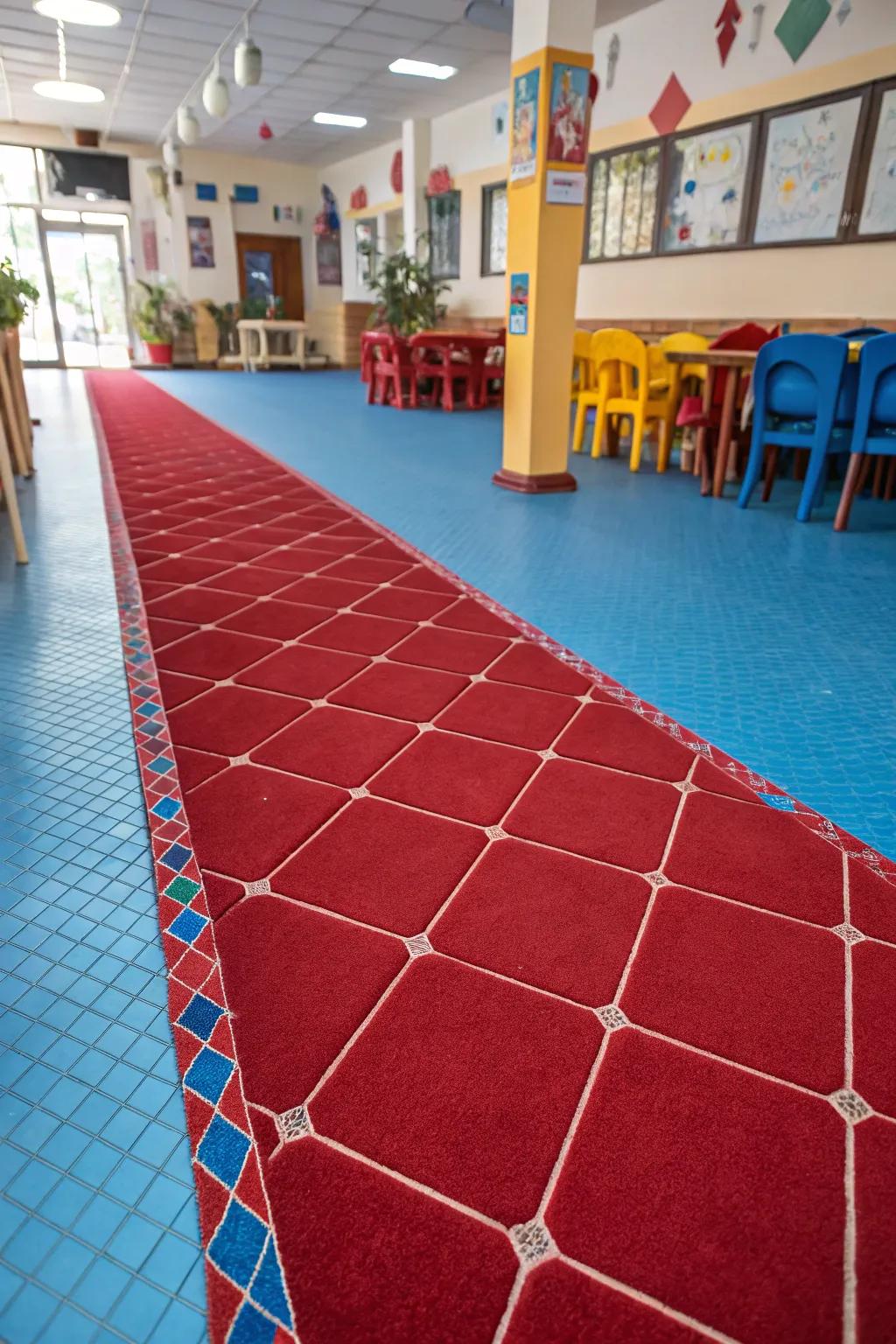
Diagonal flooring transitions inject movement and vitality, transforming ordinary rooms into captivating environments. They’re a favorite for adding flair to dynamic interiors.
Recommended items:
- Modular Floor Squares: Create vibrant diagonal patterns with interlocking tiles.
- Directional Floor Connector Strips: Smooth uneven floors while adding diagonal accents.
- Decorative Diagonal Floor Borders: Add sophistication with angled decorative trims.
Use Strategically Placed Rugs to Bridge Surfaces
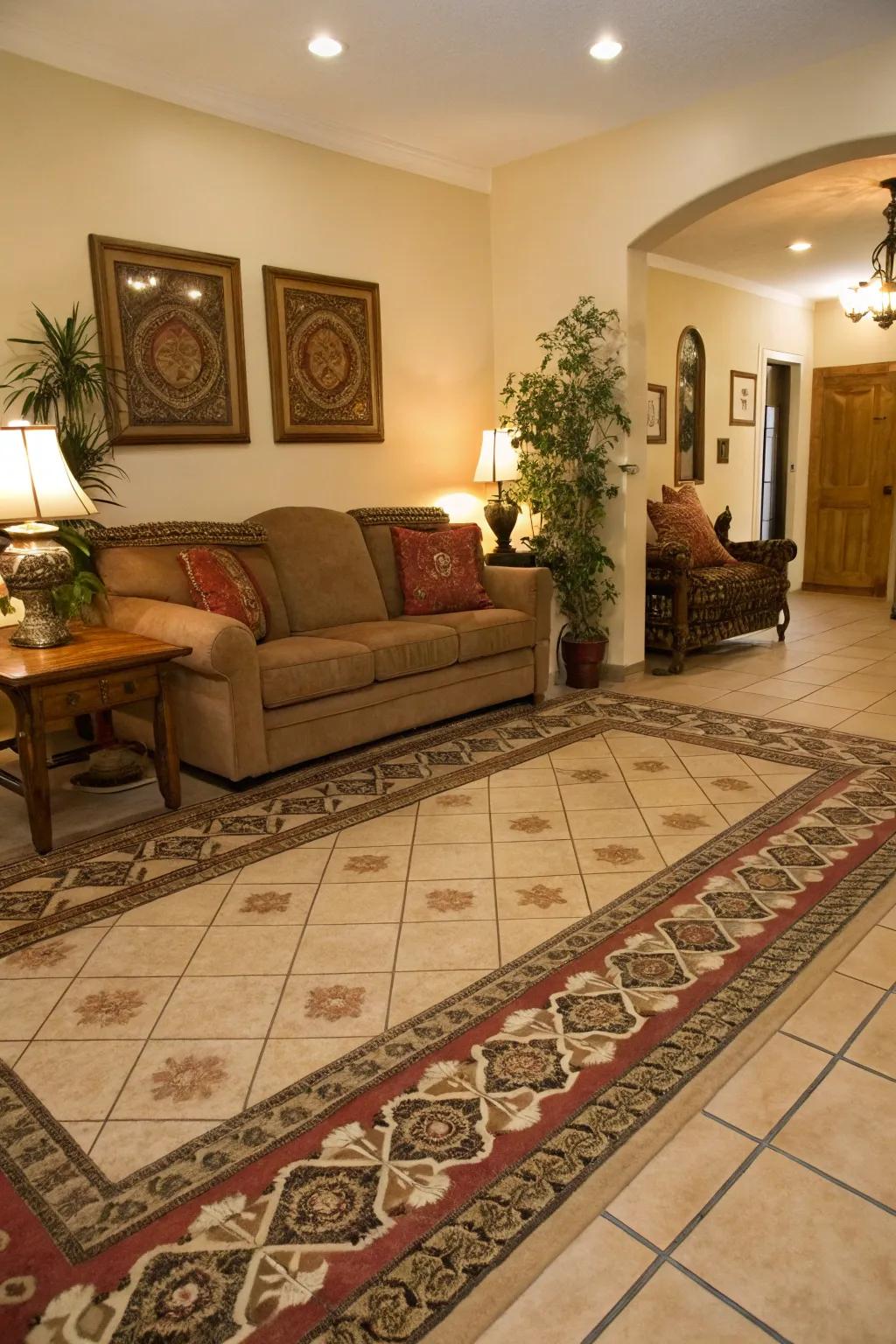
Area rugs with bold patterns or textures serve as excellent connectors between carpet and tile, adding warmth and style. Layering rugs can effortlessly unify distinct flooring types.
Helpful products include:
- Patterned Area Rugs: Bring color and texture to your flooring transitions.
- Non-Slip Rug Pads: Ensure safety and stability under rugs.
- Natural Fiber Rugs: Add organic texture with jute or sisal rugs.
Utilize Height Leveling Strips for Smooth Transitions
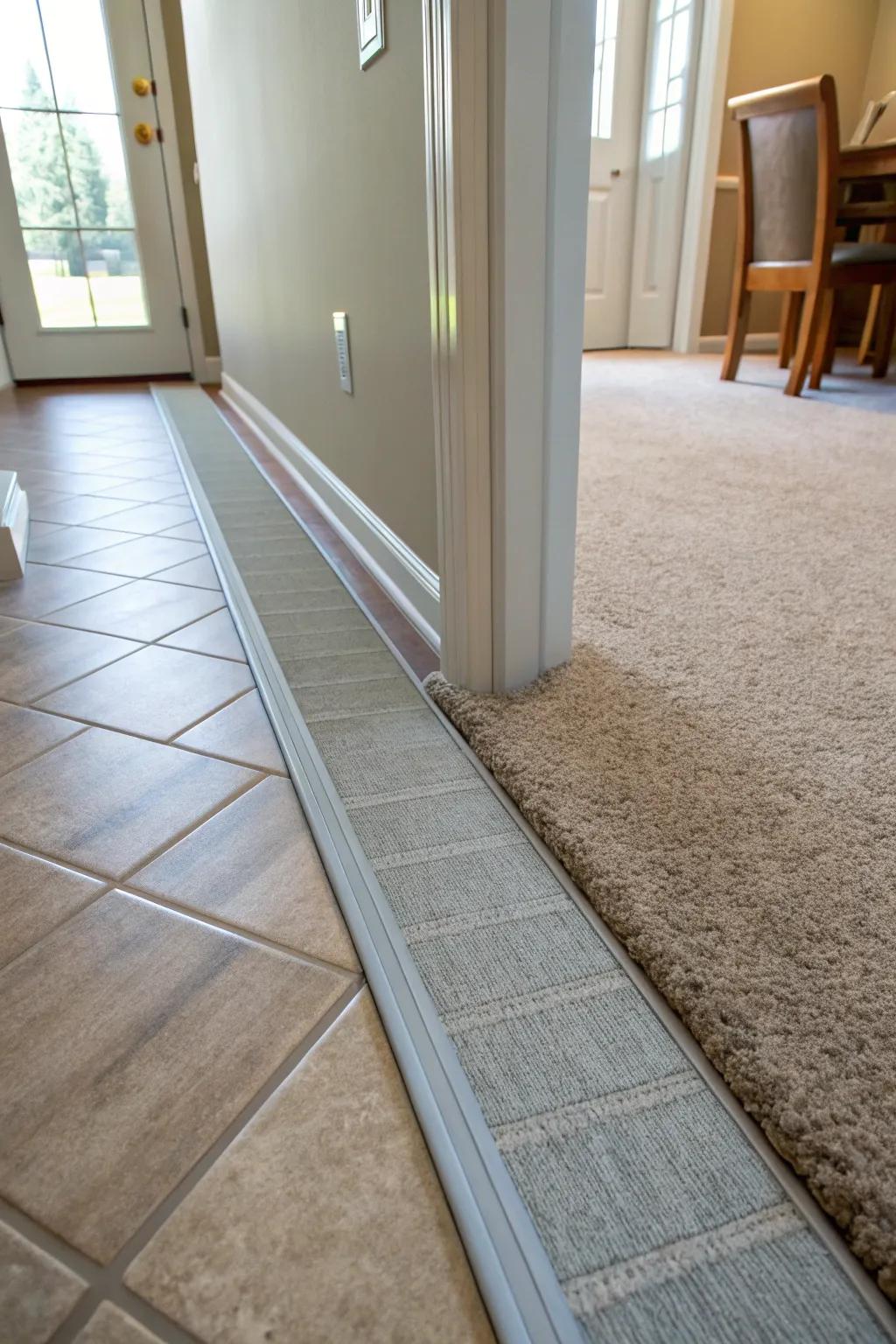
Height leveling strips act as a bridge, elegantly evening out the difference between carpet and tile surfaces. They’re ideal for subtle, unobtrusive transitions.
Options to consider:
- Adjustable Leveling Strips: Customize the height for a flawless blend.
- Multi-Purpose Transition Strips: Enhance safety and aesthetics between floors.
- Aluminum Finish Leveling Strips: Durable and sleek for modern interiors.
Create Bold Contrasts to Define Spaces
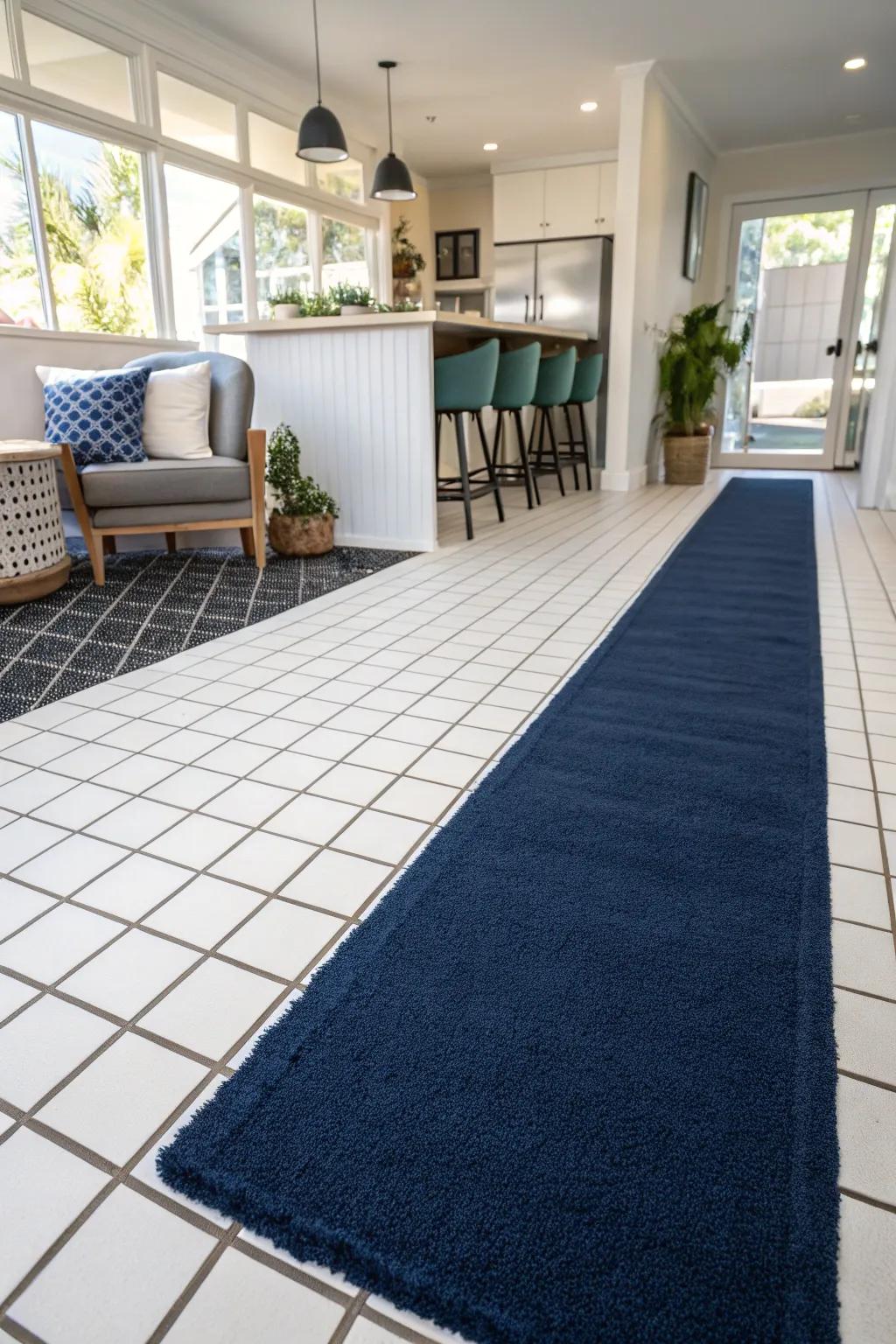
Using stark contrasts between carpet and tile can make a striking design statement, clearly delineating different zones. This technique energizes open-plan layouts with visual excitement.
Suggested products:
- Entrance Floor Connectors: Seamlessly join carpet and tile with elegant contrast.
- Rug and Carpet Grippers: Provide stability while enhancing style.
- Decorative Floor Rugs: Inject bold colors and patterns for vibrancy.
Incorporate Geometric Edge Patterns for Modern Flair
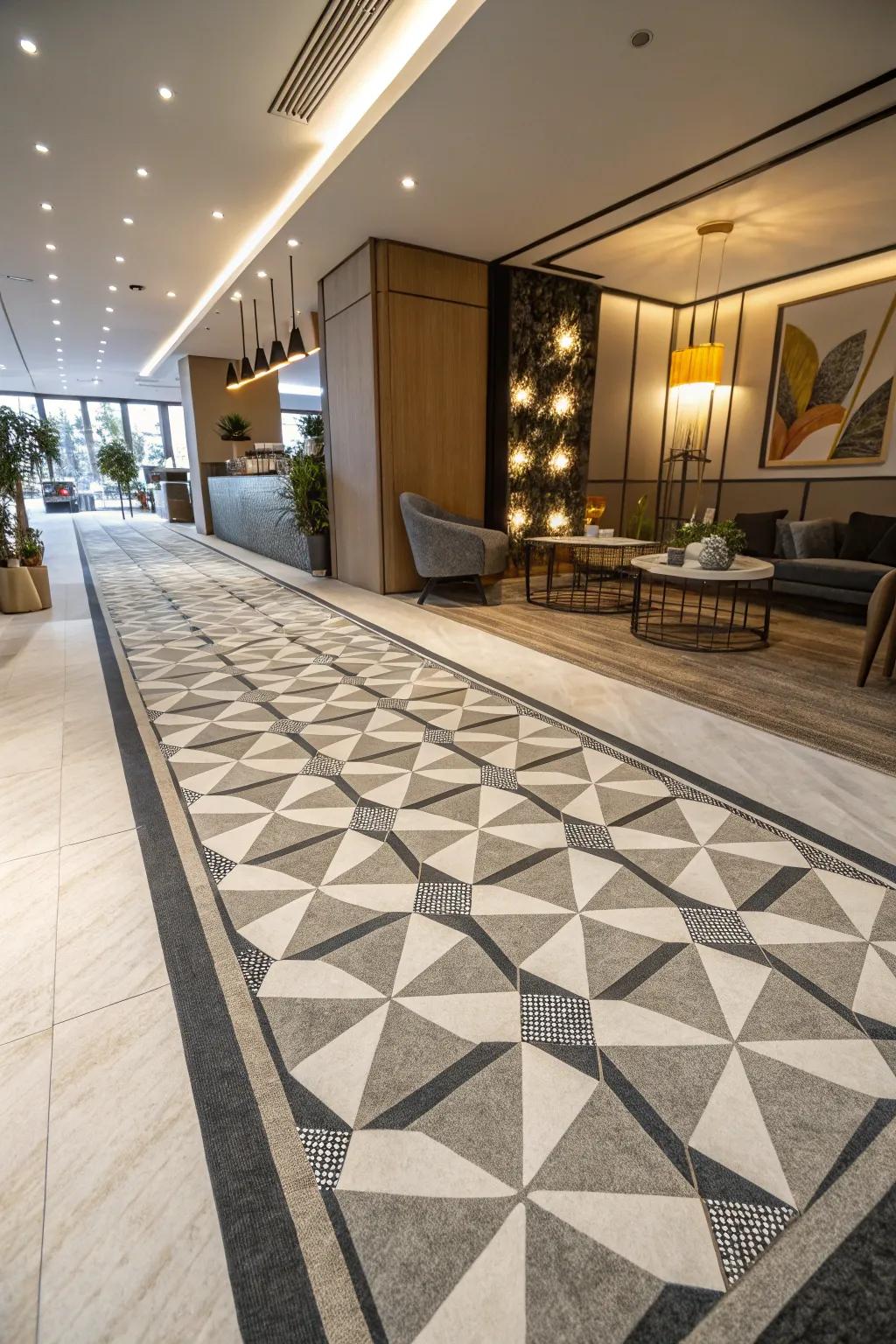
Geometric motifs can transform flooring transitions into artistic focal points, lending a contemporary vibe. Strong patterns bring depth and character to otherwise plain areas.
Recommended selections:
- Geometric Pattern Blending Strips: Stylishly merge carpet and tile with eye-catching designs.
- Ornamental Floor Edging: Adds decorative flair to flooring borders.
- Adjustable Height Floor Moldings: Perfect for modern interiors requiring precise height matching.
Unify Spaces with Complementary Color Schemes
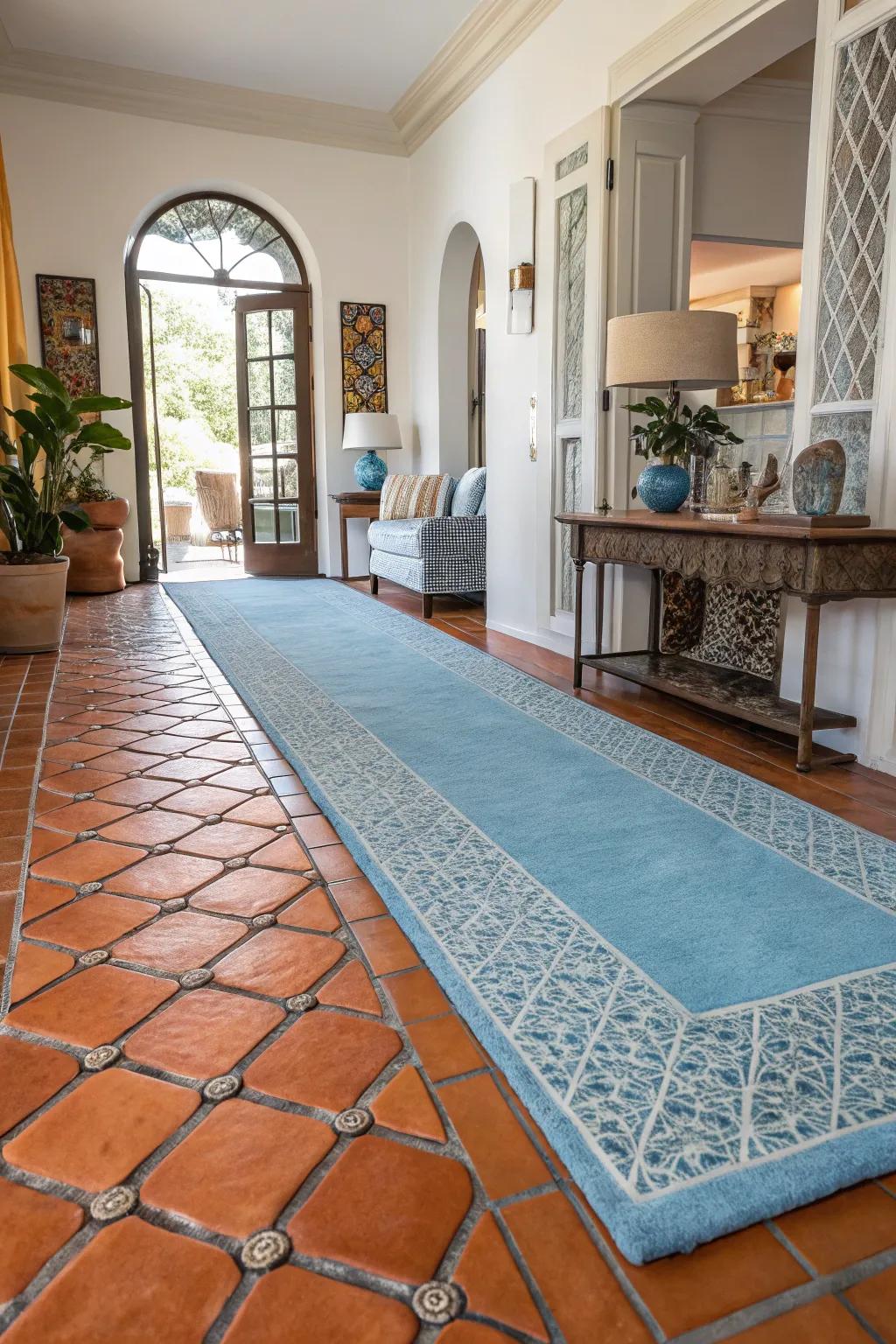
Using complementary hues can visually connect different flooring types without appearing overly matched. This technique fosters balance and unity across diverse areas.
Helpful items:
- Blue and Orange Runner Rugs: Tie together spaces with vibrant color runners.
- Coordinated Accent Pillows: Add pops of color to sofas for a cohesive look.
- Color-Themed Wall Art: Extend floor colors upward for a unified design.
Enhance Transitions with Decorative Tile Borders
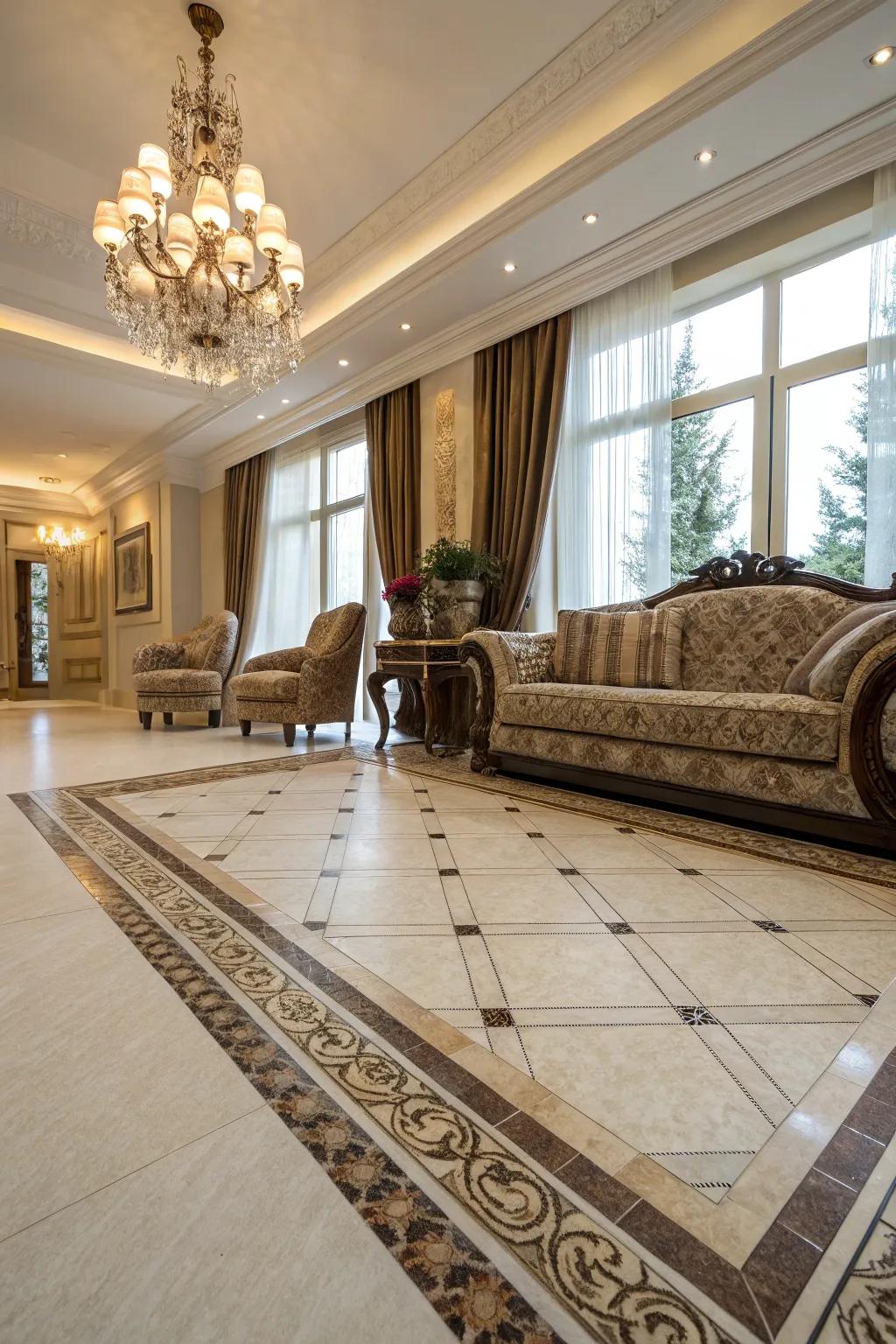
Adding a decorative tile border can elevate the transition area, lending sophistication and clearly defining the flooring change. This is especially effective in upscale living environments.
Explore these options:
- Elegant Tile Edge Accents: Perfect for seamless carpet-to-tile transitions.
- Premium Tile Transition Strips: Ensure smooth and stylish flooring merges.
- Luxurious Marble Tile Accents: Add a touch of opulence to height transitions.
Incorporate Artistic Patterns for Added Character
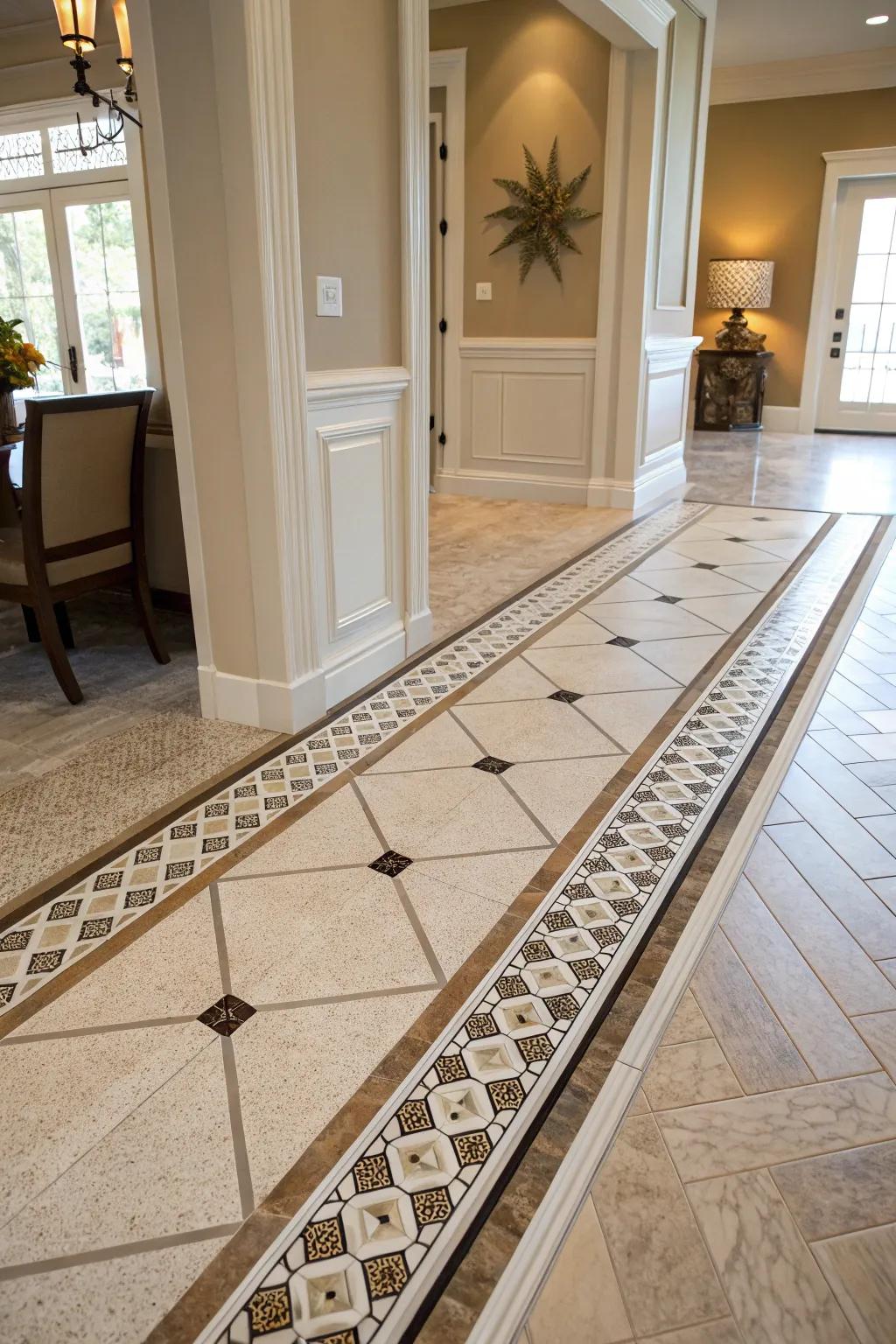
Decorative motifs can transform transition zones into expressive spaces, injecting personality and charm. I often use these to enliven otherwise plain flooring junctions.
Products worth considering:
- Ornamental Tile Connector Strips: Stylishly blend carpet and tile with decorative flair.
- Patterned Carpet Tiles: Add vibrant designs that inspire and captivate.
- Mosaic Floor Border Tiles: Highlight transitions with elegant mosaic accents.
Choose Curved Transitions for a Graceful Flow
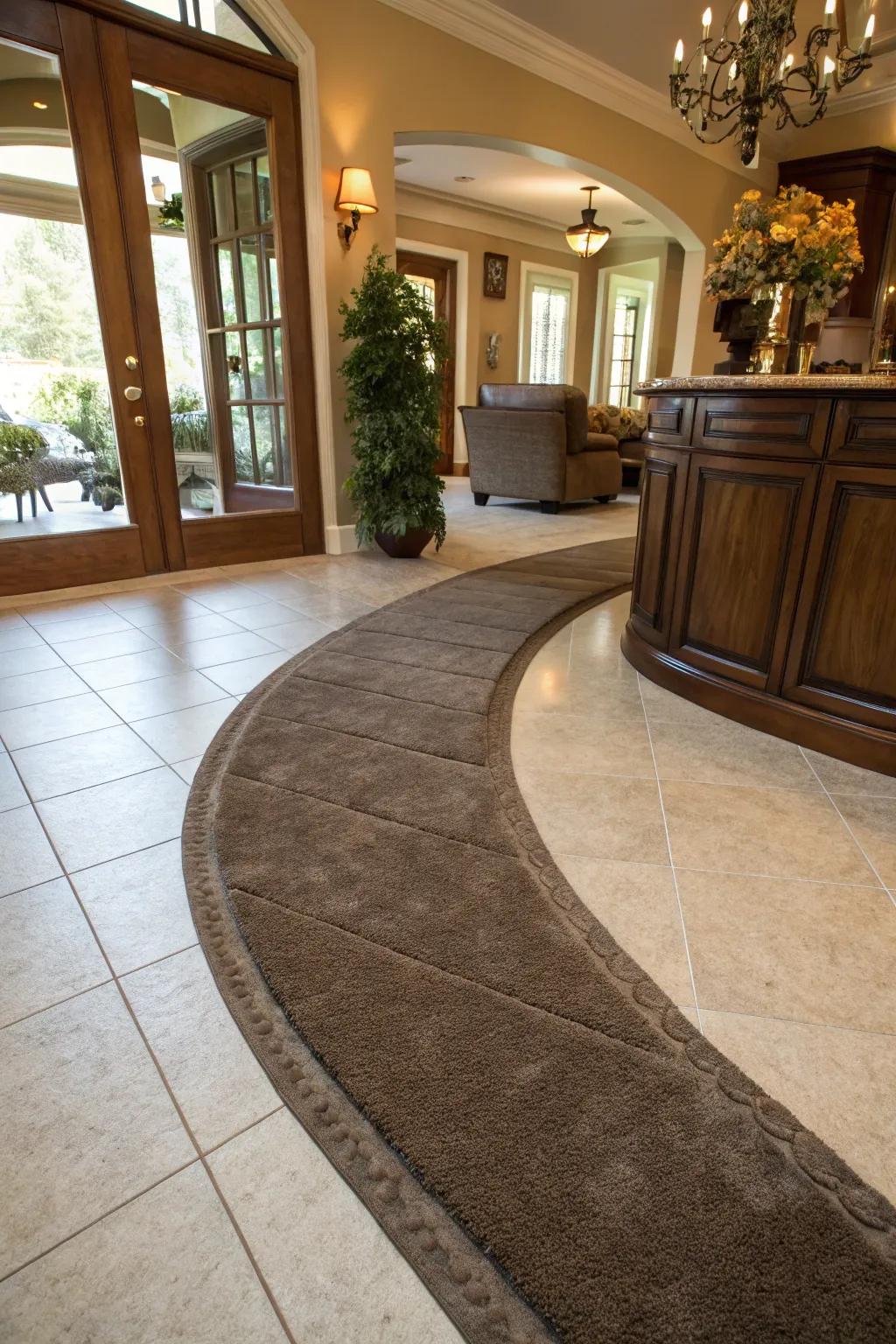
Curved edges soften the rigid lines between carpet and tile, promoting a fluid and elegant movement throughout the space. This style suits areas where a gentle, organic feel is desired.
Recommended products:
- Curved Floor Blending Strips: Provide safe, smooth, and stylish transitions.
- Flexible Floor Edge Binding: Adapts to varying heights and shapes seamlessly.
- Curved Height Reducer Moldings: Perfect for flawless curved transitions.
As an Amazon Associate I earn from qualifying purchases.