The first time we slipped into the OLRIK Women Plus Size Romper casual Jumpersuit overall Shorts wiht Adjustable Strapes Pockets Trendy Shortalls,the lightweight polyester greeted us with a cool,slightly silky hand that felt more drapey than clingy. As we moved, the fabric swung away from the body and the wide shorts held their shape instead of folding flat; it felt airy in motion but not insubstantial. Standing up, the seams sat quietly along the hips; sitting down, the front panel kept a little structure while the hem eased over our thighs. adjusting the straps changed how the neckline settled and shifted the weight across our shoulders in a small, noticeable way. Tucking our hands into the pockets on that first afternoon,we were struck by the discreet bulk they add and how the piece reads differently in stillness than in stride.
Our first look at the romper’s shape, straps and pocket layout
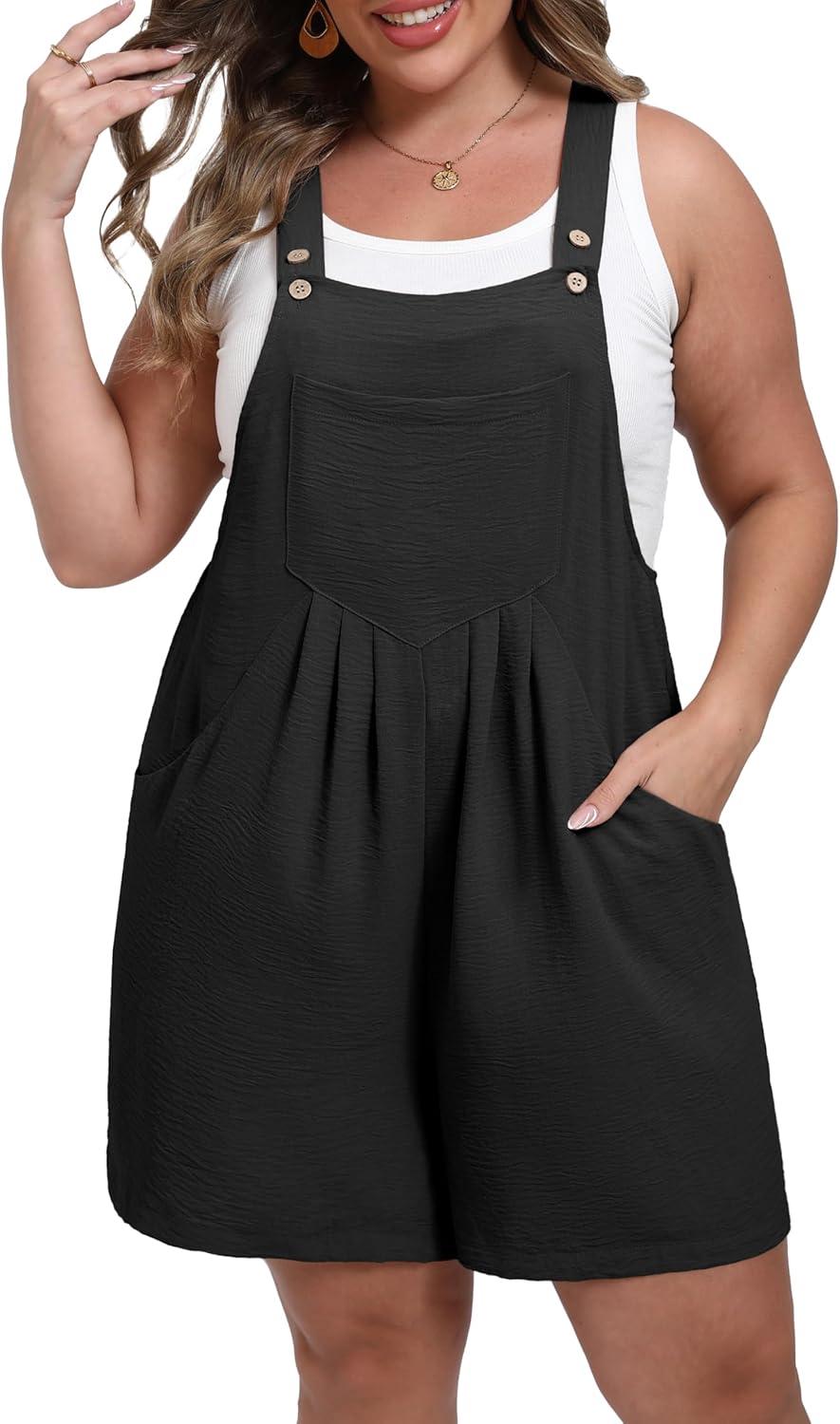
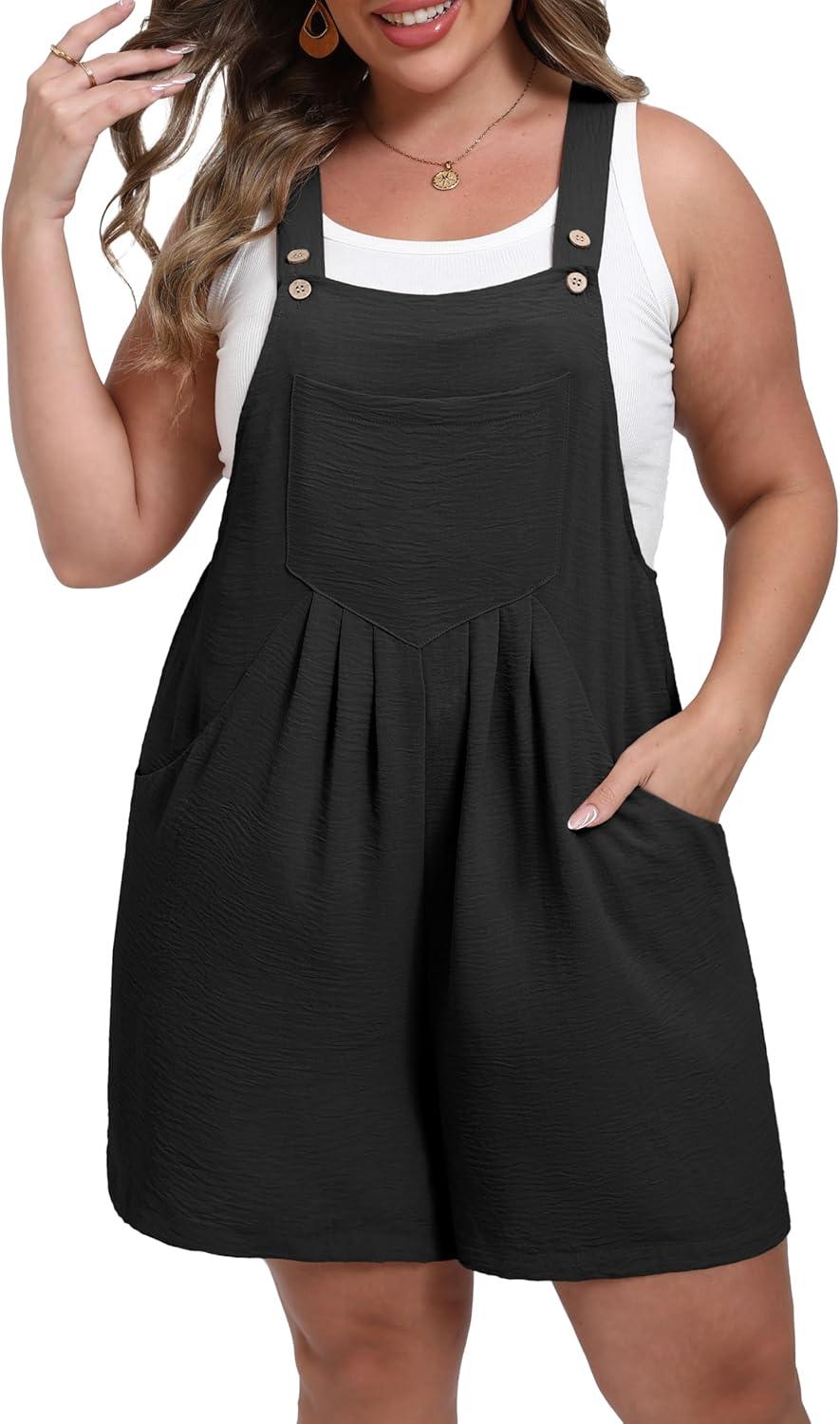
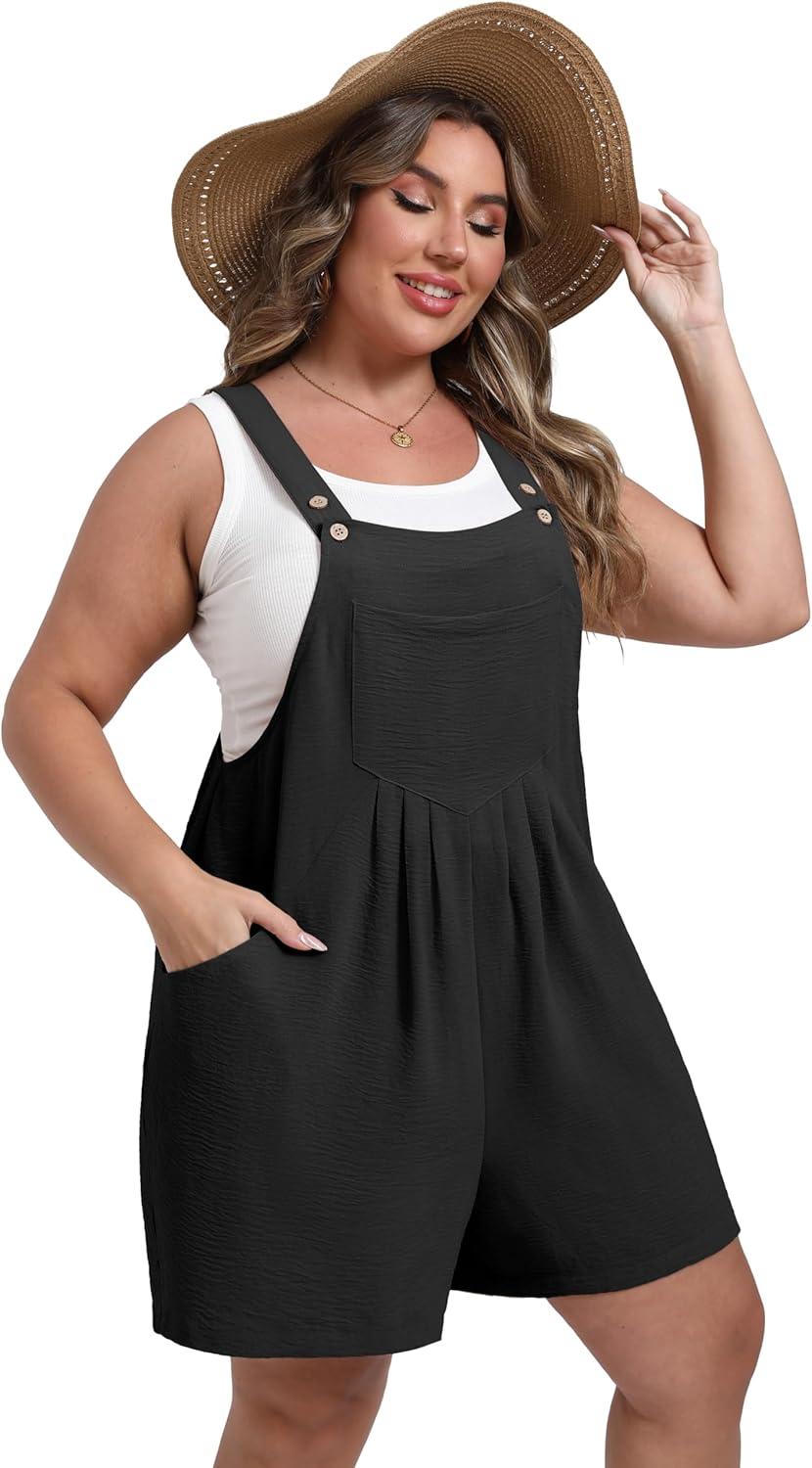
When we step into the romper and stand still, the overall silhouette reads as a relaxed shortall: the torso hangs with a gentle straightness while the shorts open into a roomy, mid-thigh hem that moves with the body. The front bib sits flat against the chest when untouched, and the three adjustment points along the top edge let us shorten the rise in small increments — buttoning them higher pulls the bib and waist up, unbuttoning lets the front drop and the shorts sit a touch lower. As we reach or bend, that change in rise becomes obvious in how the fabric folds across the stomach and where the leg openings land.
We notice the wide shoulder straps promptly when we shrug them into place; they lie broad and stay put for the most part, though they can shift outward toward the armhole with frequent arm movement. The straps fasten with visible hardware at the bib, and adjusting them alters the torso length more than it changes the shape of the shorts. Pocket placement skews the visual weight toward the hips and center front: the two side pockets sit at hip level and open broadly enough that our hands find them without fumbling, while the large chest pocket fills the middle of the bib and sits flat when empty but rounds slightly when we carry small items. When we smooth the fabric or shift from standing to sitting, those pockets disclose how much they affect drape and seam lines — sometimes creating slight pulls or lumps, sometimes settling back flat again.
Up close with the fabric, stitching and adjustable hardware we inspected
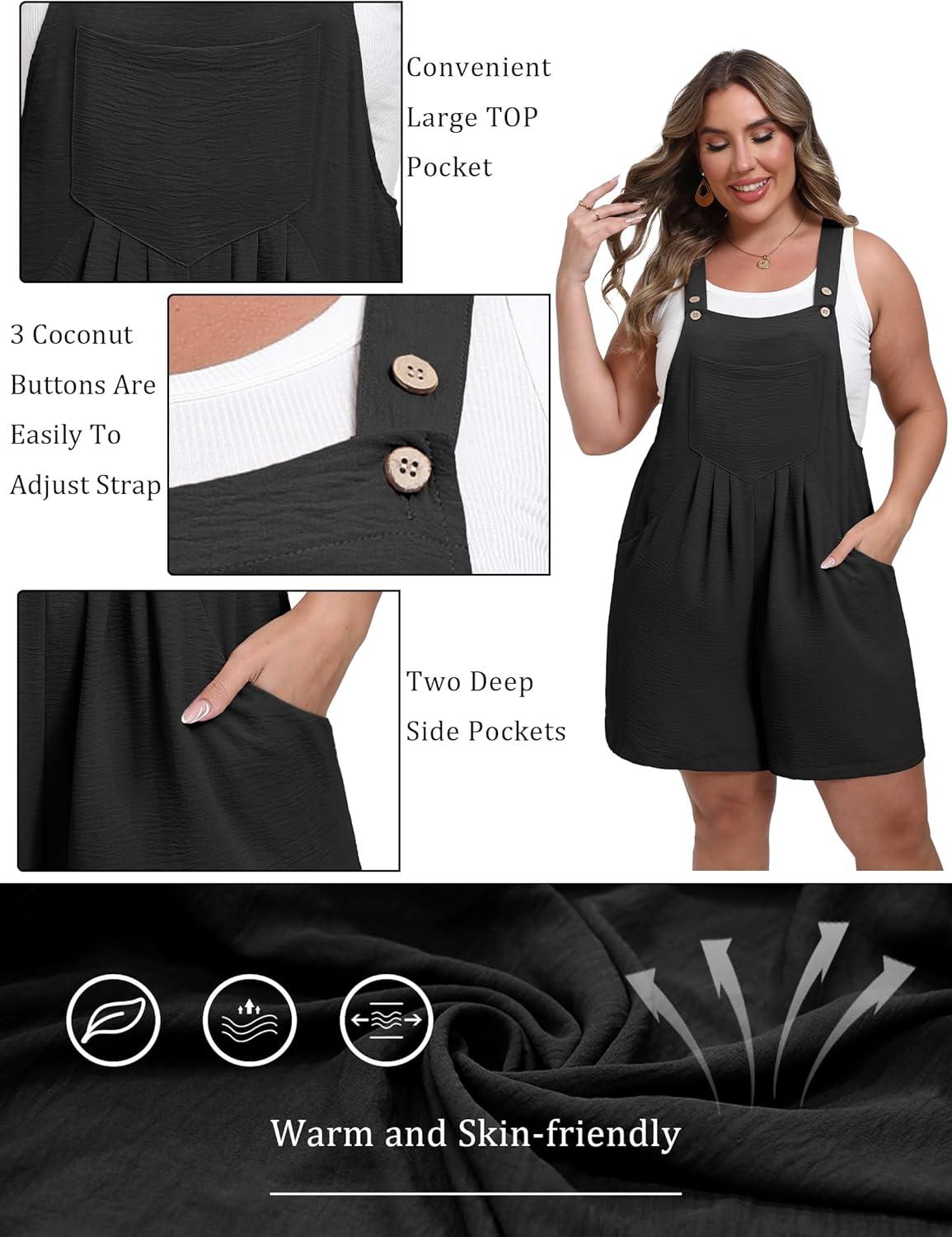
Up close, the fabric reads as a thin, slightly drapey cloth that settles against the body rather than holding a rigid shape. As we moved around — sitting, reaching, walking — the surface softened where it contacted skin and gathered softly at the hip seams and inner thighs; small folds formed that smoothed again when we shifted. The stitch lines along the side seams and the leg hems sit discreetly; under light scrutiny we could see a consistent stitch length and the seams generally lie flat against the body, though a little puckering appears at points where the fabric is pulled taut, such as where the pocket mouths meet the side seams. Pocket openings show a second line of stitching close to the edge, and after a few uses the thread there seems to take the strain first, which is where we noticed the occasional stray fiber or two.
Examining the adjustable hardware, we found the straps respond to a firm tug — the adjustment points move in clear steps and stay put once set, yet the straps can shift slightly after prolonged motion, so we ended up smoothing them out during long periods of wear. The attachment points where the straps meet the body of the garment are stitched with multiple passes; those reinforcement stitches are visible from the inside and tend to hold their shape when the straps carry the garment’s weight. The fastenings sit close to the torso and lie flat enough that they rarely press conspicuously against skin,though on some movements they brush the collarbone and need a discreet nudge to settle back.the small signs of wear — a loosened thread at a pocket edge,a strap that drifts a touch — show where the construction takes daily use,rather than altering how the piece hangs from the first moment we put it on.
How it moves on us, the cut points that follow our stride and the strap behaviour in motion
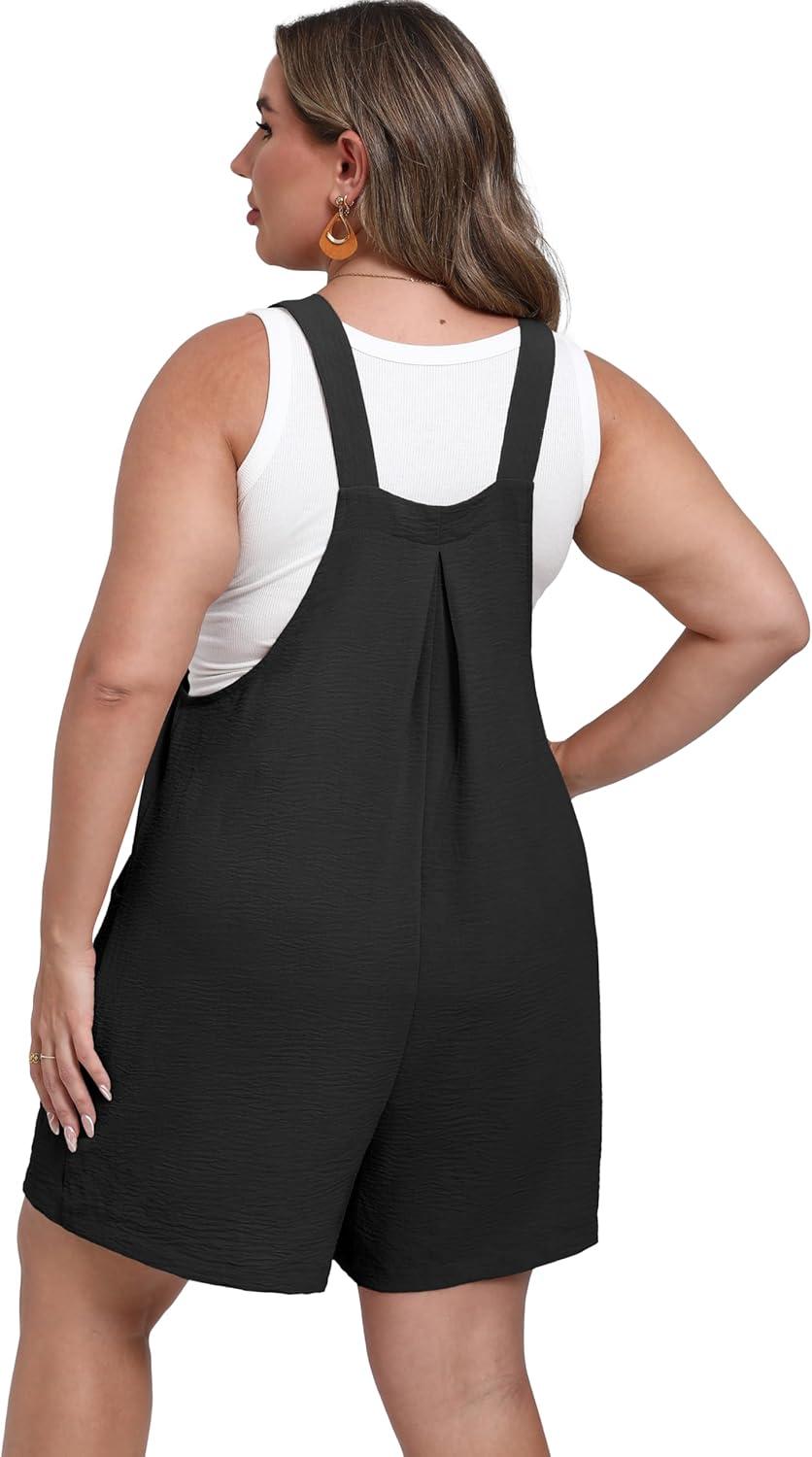
When we walk in it the romper reads as an active garment rather than a static shape. The cut points at the hips and along the thigh track our stride: the side seams shift forward and back with each step, and the short leg openings tend to inch upward on a brisk walk so the hemline sits slightly higher after a few minutes of movement. The front panel gives a little when we take a long stride, creating small horizontal pulls across the belly and at the crotch that fade again as we slow. Pockets move with whatever we put in them, so reaching into a side pocket nudges the fabric and briefly alters how the outer seam falls.
Our interaction with the straps is part of the routine of wearing it. Once we set the straps they mostly hold their place across the shoulders, though when we raise our arms or reach overhead the straps tug forward and then settle back—sometimes we smooth them with a hand out of habit. The adjustment points don’t readjust on their own in normal movement, but the strap length can feel different after sitting or bending, prompting a quick nudging or re-tuck. the romper moves as a single piece: the straps, panels and cut points respond to motion in sequence rather than independently, so small shifts in posture show up as gentle changes across the whole silhouette.
Its suitability for our everyday use and how expectations matched reality, plus practical limits we noticed
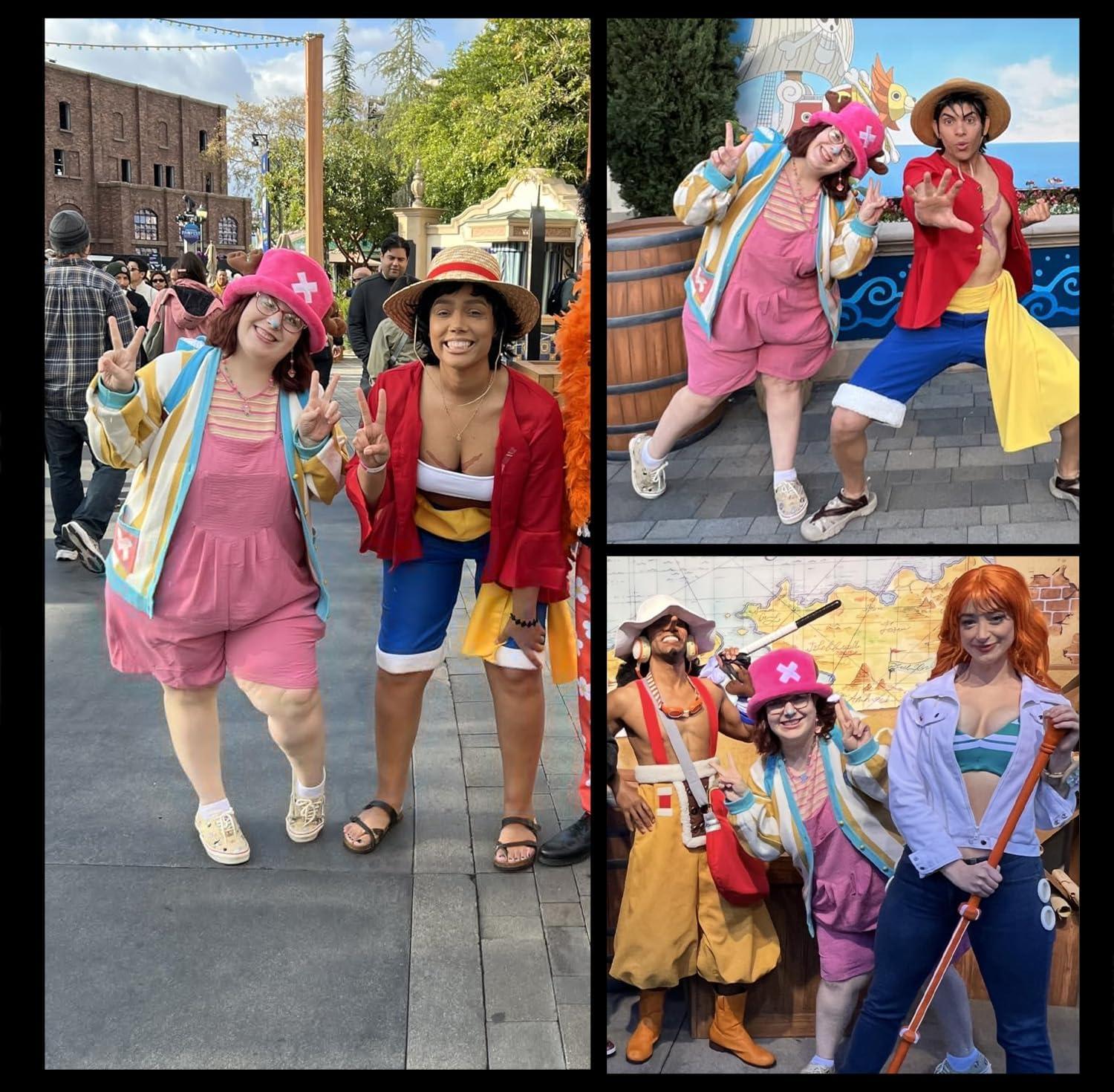
Worn through a couple of errand-filled mornings and a relaxed weekend at home, the romper settled into a pattern of everyday behaviors that felt familiar rather than surprising. The shoulder straps were nudged a few times after carrying a tote or bending over, and we found ourselves smoothing the fabric at the hips when sitting for a while — small, repetitive adjustments rather than anything disruptive. The pockets functioned as quick stashes for a phone or keys during short outings, though the front pocket tended to sit visibly away from the body when it was loaded, which changed the silhouette as the day progressed.
Expectations about ease and convenience mostly matched what we experienced. The piece moved with a casual gait and stayed pleasant during stretches of standing and light walking, but the leg openings shifted a bit during longer walks and when climbing stairs, which meant minor re-arranging mid-activity. After sitting for an hour or more we noticed a slight pull across the seat and occasional rubbing where seams met — nothing abrupt,but a repeated sensation that cropped up on longer days.Laundry and general upkeep were straightforward in practise; after a wash the shape and color were largely intact, though the fabric did relax differently than when it was brand new, which subtly altered how it draped over time.
the day-to-day limits showed up as small, habitual tweaks rather than constant interruptions: adjusting straps after putting on a bag, smoothing the front pocket before standing for photos, or shifting the shorts after a long commute. These tendencies felt like part of wearing a casual piece rather than unexpected failures, and they defined how the garment fit into the rhythms of errands, at-home wear, and short outings.
View full specifications and available sizes and colors
Observed wear after a few wears and washes, noting changes in color, seams and pocket performance
Color softened noticeably after the second wash — not a dramatic run, but a touch less vibrancy where the fabric rubs against itself and our bags.The areas that see the most movement and contact (inner thigh seams and the face of the large front pocket) picked up a slightly duller tone first; in normal light the change is subtle, but up close the finish looks a bit flatter than when new. we also noticed a scattering of tiny lint particles clinging to the surface after cycle washing, which made the color look less uniform until we brushed or rewetted the fabric.
Seams behaved in a predictable,lived-in way. The stitching stayed intact but a few places — the crotch seam and the pocket openings in particular — developed gentle puckering and soft creases where the fabric gathers during movement. the strap attachment points showed the most micro-stress: small thread loops and a couple of tiny pulls that sit snugly against the skin when we move our shoulders. Those pulls don’t come undone, but they change the smooth line of the seam and make us smooth the area when putting the garment back on.
pocket performance shifted the most with wear.The side pockets held small items securely at first, but after several wears and washes their mouths relaxed and the openings became a little wider, so coins and slim phones settled lower in the pocket and occasionally nudged against the seam. The large front pocket keeps its shape better across horizontal movement, yet it begins to sag slightly after repeated washing, creating a soft fold that collects lint and shows more wear at the pocket corners. As we moved through a day — reaching, sitting, shifting weight — we found ourselves adjusting the contents and smoothing the pocket faces more than we did when the garment was new.
How It Wears Over Time
After a few wears we find the OLRIK Women Plus Size Romper Casual Jumpersuit Overall Shorts with Adjustable Strapes Pockets Trendy Shortalls moves from being a new curiosity to a familiar layer in our closet.In daily wear the fabric softens and the silhouette loosens in the spots that matter, so comfort becomes part of the background instead of the focus. As it’s worn in regular routines we notice small, quiet changes — a softer hand, a looser ease — that make it somthing we reach for without much thought. Over time it settles.
As an Amazon Associate I earn from qualifying purchases.