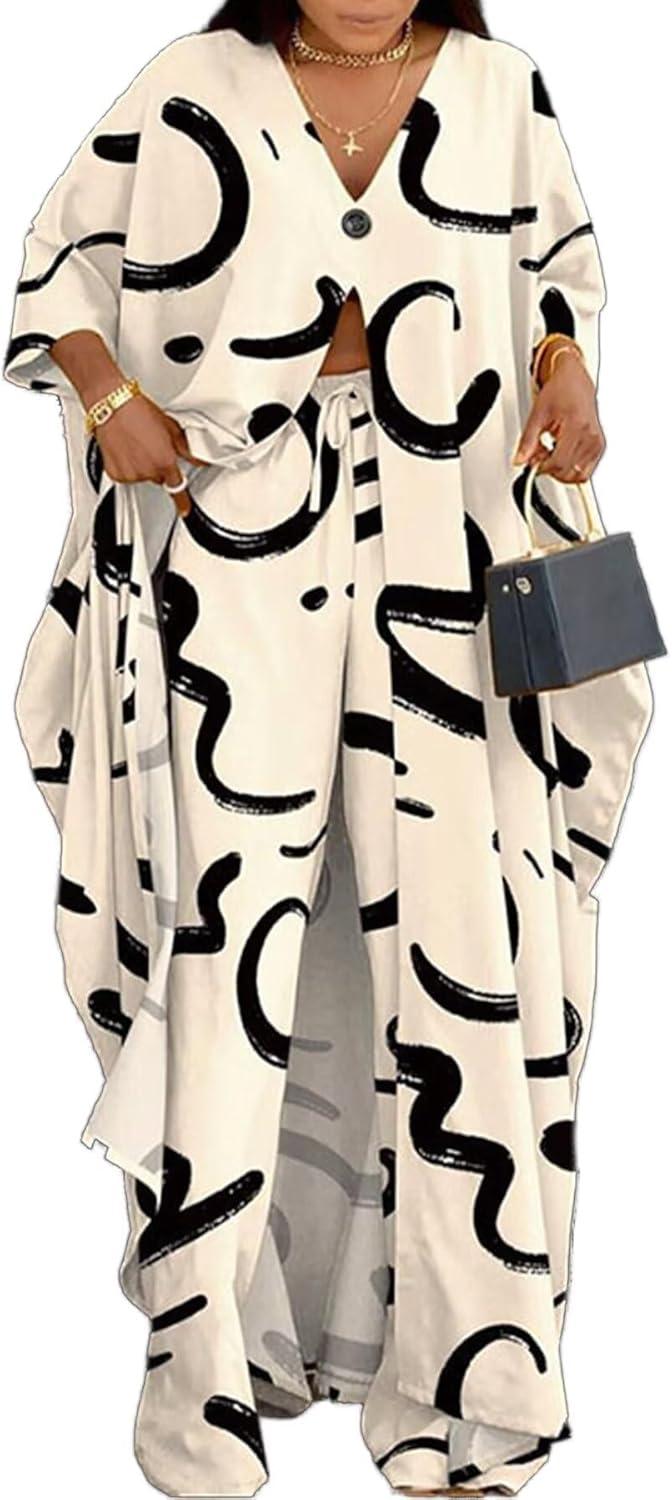
We slipped into the LROSEY Fall African 2-piece caftan set on an ordinary afternoon and promptly noticed how the pieces behaved: the cardigan skimmed past our hips with a light, almost satiny whisper, while the wide-leg pants swung with each step. The fabric feels airy but with enough body to avoid clinging; seams at the shoulders and waist sit quietly, not puckering, so the drape reads clean whether we’re moving or standing still. As we walked, the cardigan trailed without stiffness and the pant legs made a soft, hushed swish; when we lowered ourselves into a chair the material pooled gently rather than bunching. Those first moments of wear left an impression of a garment that prefers to flow, revealing its weight and fall in little, lived-in ways.
First impressions and how the set looks and settles when we unbox it
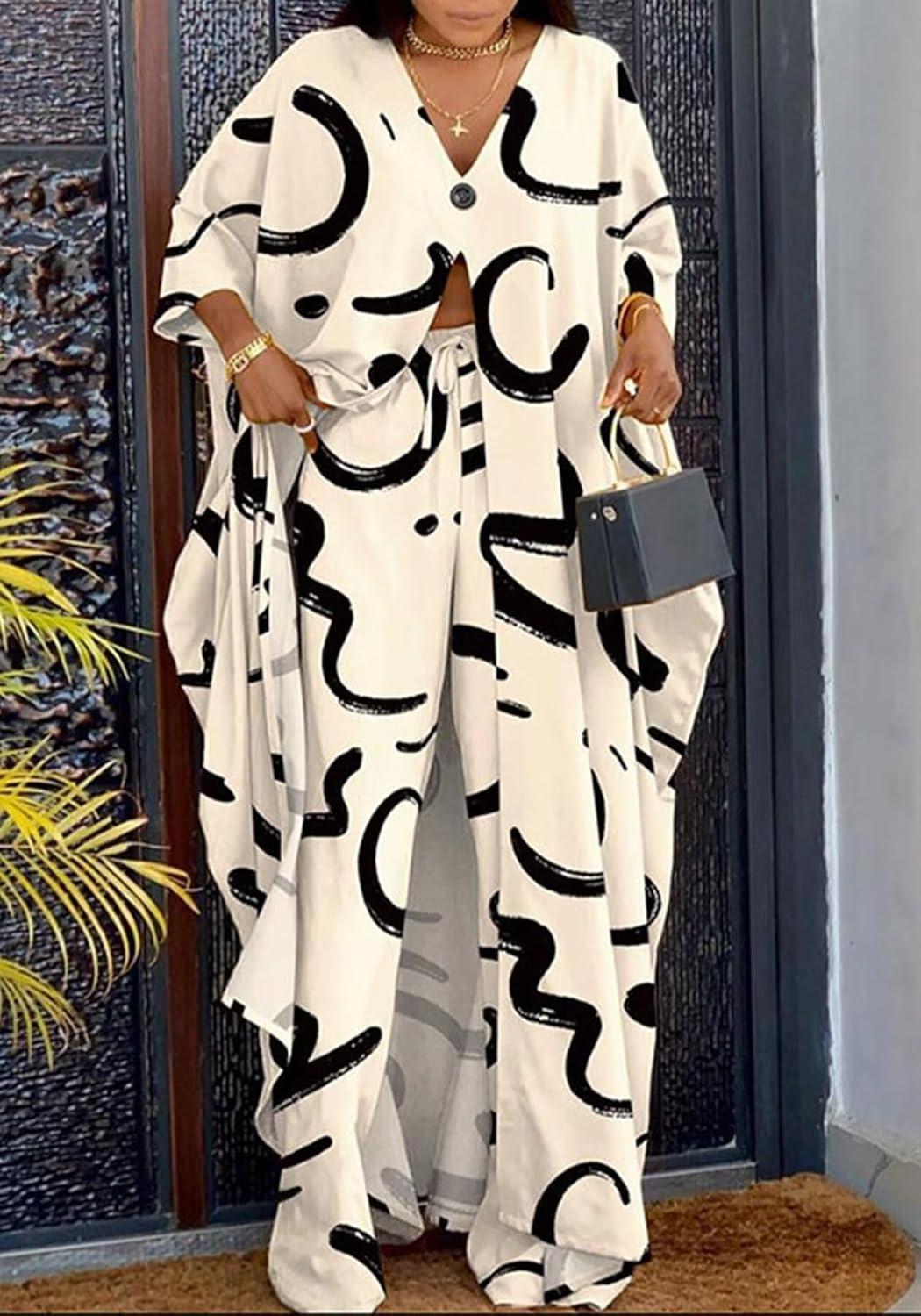
When we first unboxed the set it arrived neatly folded and wrapped, so the initial impression was mostly about how those folds translated once we put it on. There were light creases along the cardigan hem and down the pant legs from packaging; we found ourselves tugging sleeves into place and smoothing out the front panels with our palms. As we slipped the pieces on, the V-neck cardigan immediately framed the upper body and the wide-leg pants opened into their intended silhouette, but both needed a minute of movement and a few habitual adjustments—pulling the sleeves, shifting the shoulder seams, straightening the waistband—before the lines felt settled.
Out of the box there was a faint factory scent that faded after a short airing; the pattern and colors looked true to the photos once the fabric lay flat against the body. The cardigan drape and pant volume relaxed noticeably after we walked around for a few minutes. The fabric tends to soften and drape more naturally with motion, and the fold lines left by packaging usually flatten with gentle smoothing or short wear. Seams sit relatively flat after those first adjustments, though small crease marks can remain near the pockets and inner leg where the set had been folded.
What the fabric and floral print reveal to our touch and eye
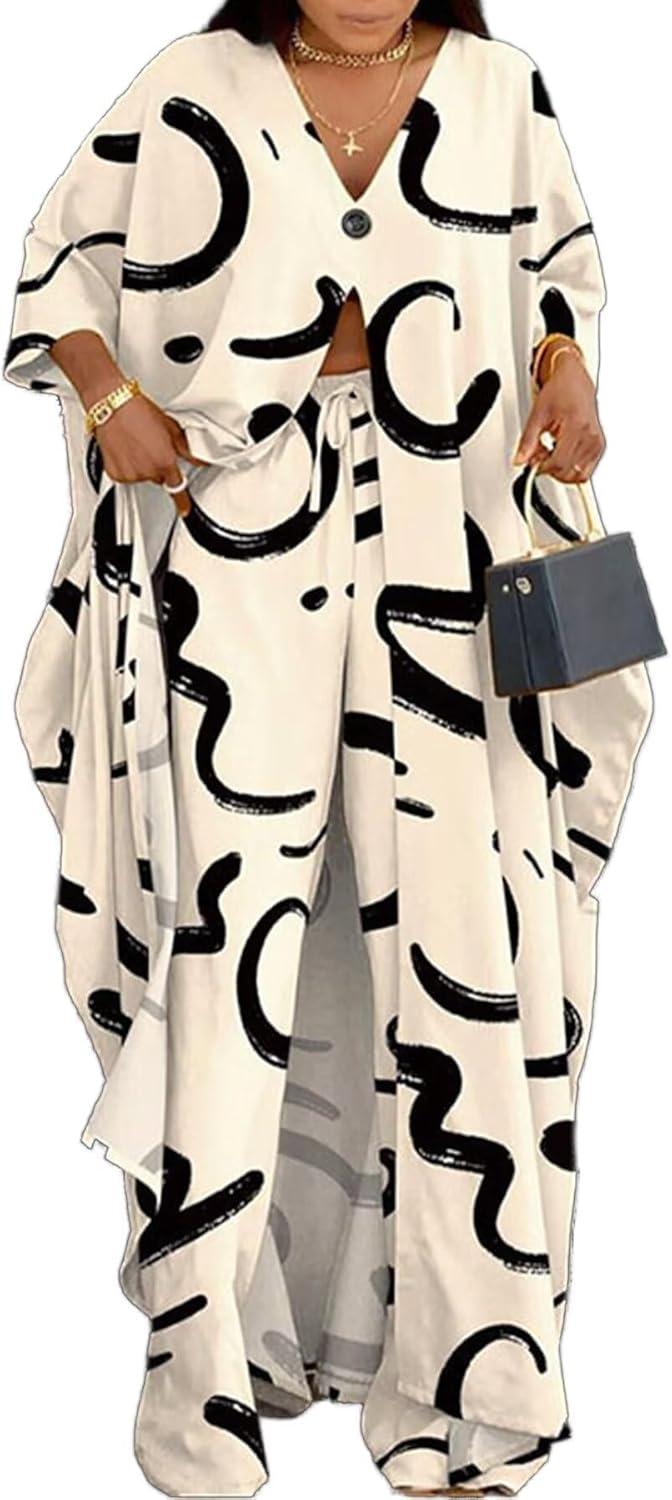
When we first slip into the set, our hands notice a cool, almost silky glide along the cardigan and pant legs. The fabric yields easily to our fingers: it smooths under a thumb, then resettles against the body, and when we run a palm down a seam we can feel a faint, consistent weave rather than a heavy texture. As we lift our arms or reach to adjust a sleeve, the material follows with a gentle, fluid movement that occasionally gathers where we habitually smooth and shift it—at the shoulders, along the waistline, and where the cardigan overlaps the pants.
Visually, the floral motif reads differently depending on distance and motion. From across the room the blooms form a rhythmic spread of color; on closer inspection the edges of petals soften slightly, suggesting a printing method that favors painterly washes over razor-sharp outlines. In motion the pattern seems to breathe: walking accelerates the sense of flow, and the print blurs subtly at folds and drapes, while the brighter hues catch light and appear more saturated on curved surfaces. Under softer lighting the background tones flatten, but in brighter light the scale and layering of the flowers become more apparent, with darker stems and mid-tones adding depth where the fabric pulls or stretches.
Our fingers often settle on the seams and hems, where the print meets stitching and the floral repeat can shift out of register just a touch—nothing abrupt, but enough that we find ourselves smoothing and realigning without thinking. After a few hours of wear, small creases form where we sit; these tiny interruptions interrupt the print’s flow and cause pockets of shadow that change how a particular blossom reads. the tactile calm of the fabric and the slightly looser, painterly edges of the floral print create a combined impression that evolves with movement and light, revealing themselves gradually as we go about wearing the pieces.
How the cut moves with us and where the proportions sit on our frame
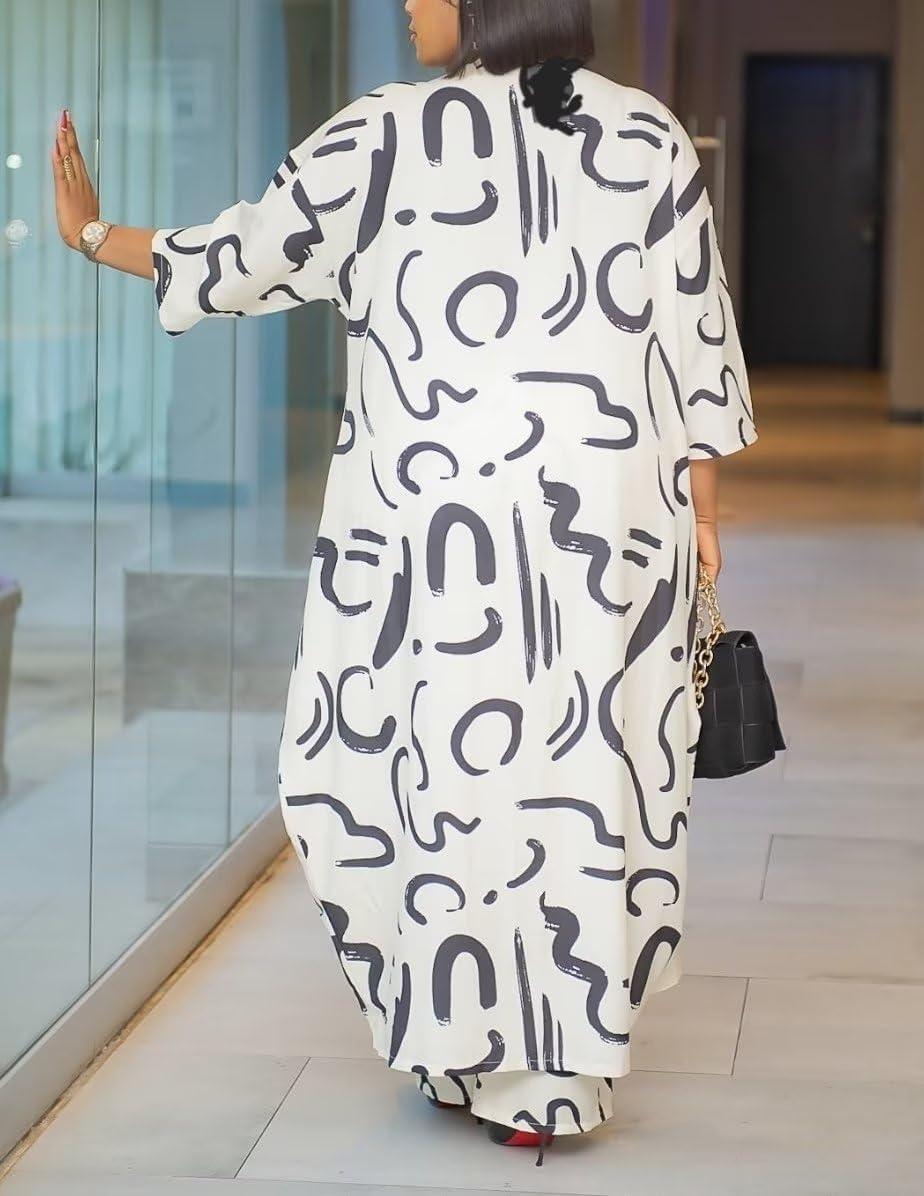
On our bodies the cardigan’s cut moves with a slow, easy swing: the long front panels part and fall away as we reach or turn, then settle back against the torso when we pause. The back drape follows shoulder movement without clinging, and the hem usually grazes somewhere between hip and mid-thigh on our frame, shifting a little higher when we sit. We find ourselves smoothing the front after walking; occasionally one panel edges forward so we nudge it back into place. the sleeves have a bit of room, so they can bunch at the elbow when we bend and are prone to being pushed up when we sweep an arm across a table.
The pants’ proportions read as a wide, straight fall: the waist seam sits in line with our natural waist on most of our wearings and the legs skim the hips before opening into a roomy column. with each step the fabric brushes the lower leg and creates a soft billow that can obscure shoes; when we sit the pant leg widens further and forms gentle folds behind the knee. Side seams may shift forward a fraction when we stride, prompting the occasional backward tug, and the overall ensemble tends to move as two coordinated layers—cardigan panels and pant legs responding differently to the same motion. these are the patterns we notice in real time rather than static measurements.
How the outfit aligns with our expectations and the practical limits we encountered
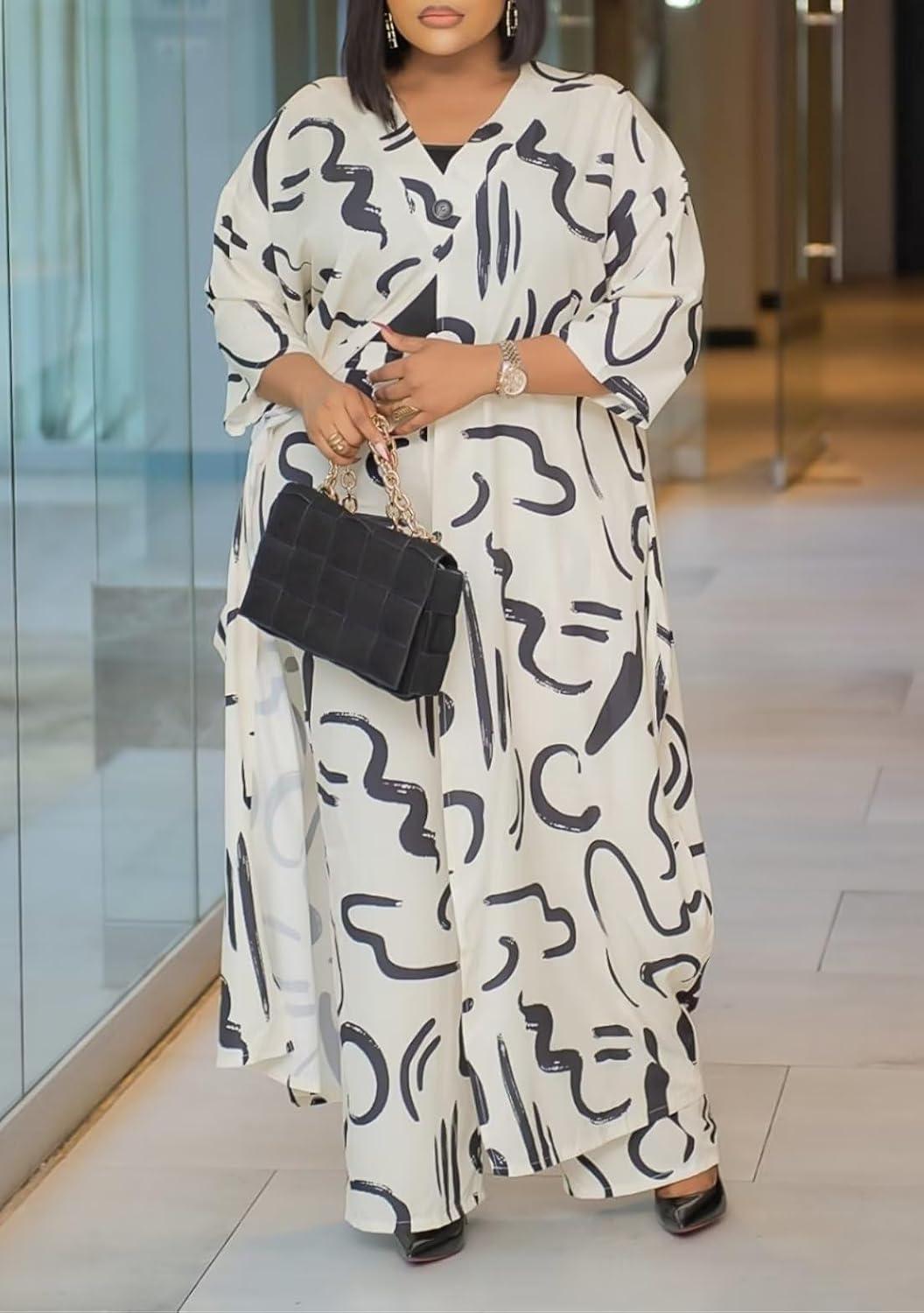
We came to this piece expecting a relaxed, easy-to-wear set, and the lived experience mostly matched that expectation.Worn around the house and during short outings, the cardigan creates a steady vertical line that doesn’t immediately lose shape, though it does shift when arms are crossed or lifted — a rapid smoothing motion becomes a small, unconscious habit. The pants provide a roomy silhouette that swings with each step; while walking this reads as generous fullness, sitting tends to gather the fabric at the lower leg and prompts occasional tugs to settle the hem. The printed surface reads much like photos in steady light, yet folds and creases that accumulate over a few hours subtly change how the motif appears on the body.
Practically speaking, the garment behaves like everyday separates that demand minor attention during use. Buttons and seams hold steady, but the long front panels can catch on chair arms and need a brief repositioning; pockets (when in use) lie flat when standing and pull slightly when filled. Small, repetitive interactions — rolling a sleeve back, smoothing a panel, shifting a waistband — were common across normal activities and feel more like maintenance than failure.These tendencies illustrate trade-offs between visual impact and the simple actions required to keep the pieces sitting as intended throughout the day.
View full specifications, sizes, and color options
How the pieces behave in our everyday wear from commute to care
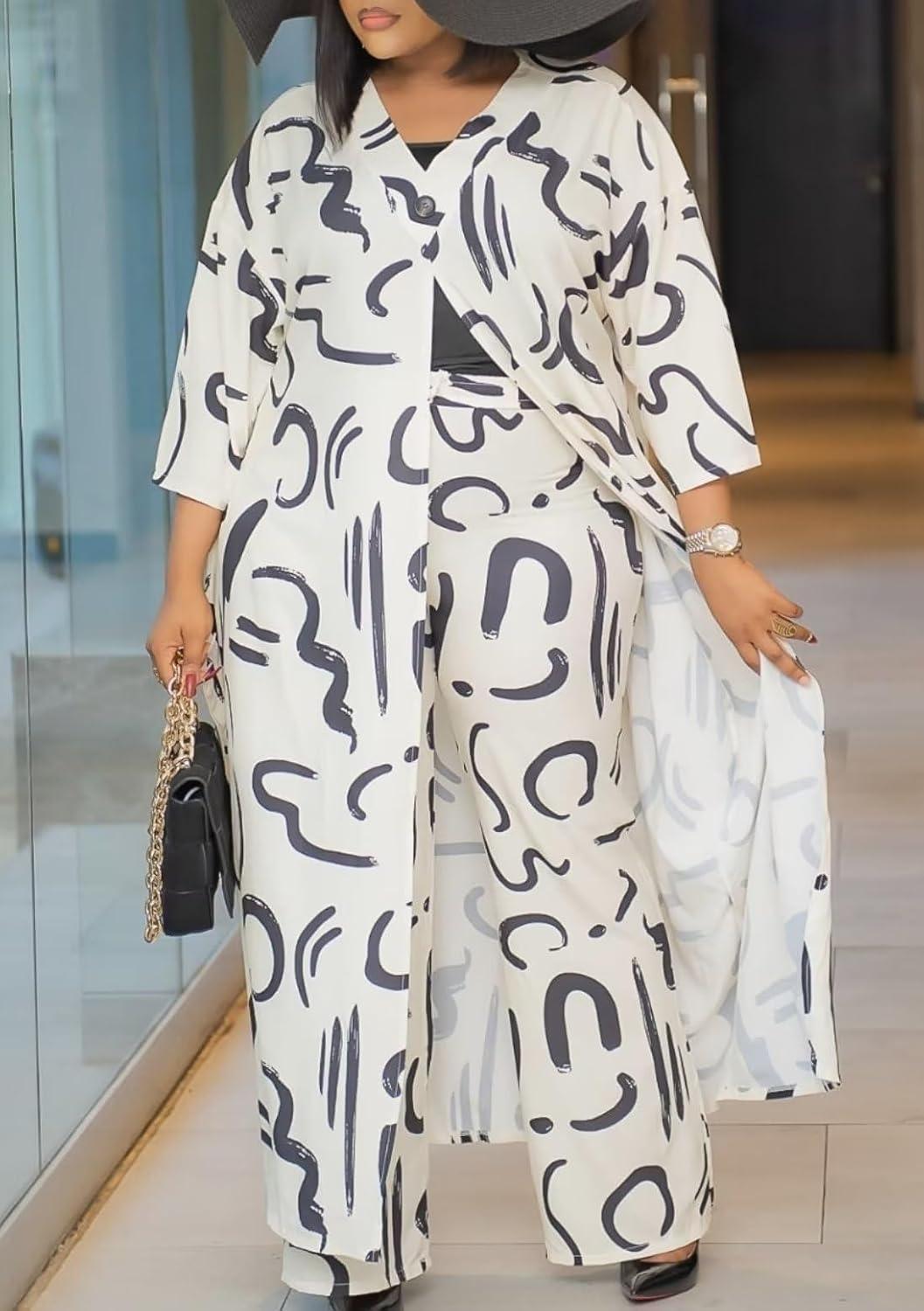
On the way to and from the office we notice the cardigan and pants move in different rhythms.As we walk briskly to the station the long cardigan breathes and sometimes flutters at the hem when a gust hits; its length tends to catch the strap of a shoulder bag, nudging the front panels off-center until we smooth them down. when the train jolts and we fold ourselves into a seat the cardigan spreads across our lap, the pattern shifting into a new, slightly compressed read; the wide-leg pants fall open around the ankles and momentarily reveal the shoe silhouette, then settle back into a soft drape. Small, unconscious gestures — hitching the sleeve up while checking a phone, tucking the cardigan behind a seatbelt, shifting a pant leg away from a pedal — happen often enough that the outfit rarely looks exactly as it did standing in front of the mirror.
During shorter errands and moments of caregiving the pieces show their practical tendencies. The pants allow for easy, unplanned movements and generally maintain a smooth fall, though the inner leg can crease where we bend repeatedly; hems may brush the ground on wet sidewalks and pick up tiny bits of lint. the cardigan can slide when we lift or carry a child, and it sometimes needs smoothing at the shoulders after reaching or leaning; a stray seam will migrate with repetitive motions. In practise,the set tends to read differently over the course of a day — calmer and more composed after sitting quietly, slightly disrupted after several transitions — and those shifts are part of how the garments behave in ordinary, moving life.
View full specifications and available sizes and colors
How It wears Over Time
Over time we notice the LROSEY Fall African 2 Piece Outfits caftans for Women Floral V Neck Long Cardigan Cover Up Wide Leg Pants Sets Plus Size slipping into our closets like any familiar item: the cardigan eases at the shoulders, the fabric softens a little, and it moves with the rhythm of weekdays. In daily wear its comfort becomes less of an event and more of a steady expectation, showing predictable behavior as it’s worn alongside errands and quite mornings. The material ages into a gentler presence, carrying small traces of repetition in its folds, and its everyday presence sits quietly within our regular routines. After a few turns through the week, it becomes part of rotation.
As an Amazon Associate I earn from qualifying purchases.